The brief from a Kimberley prototype shop
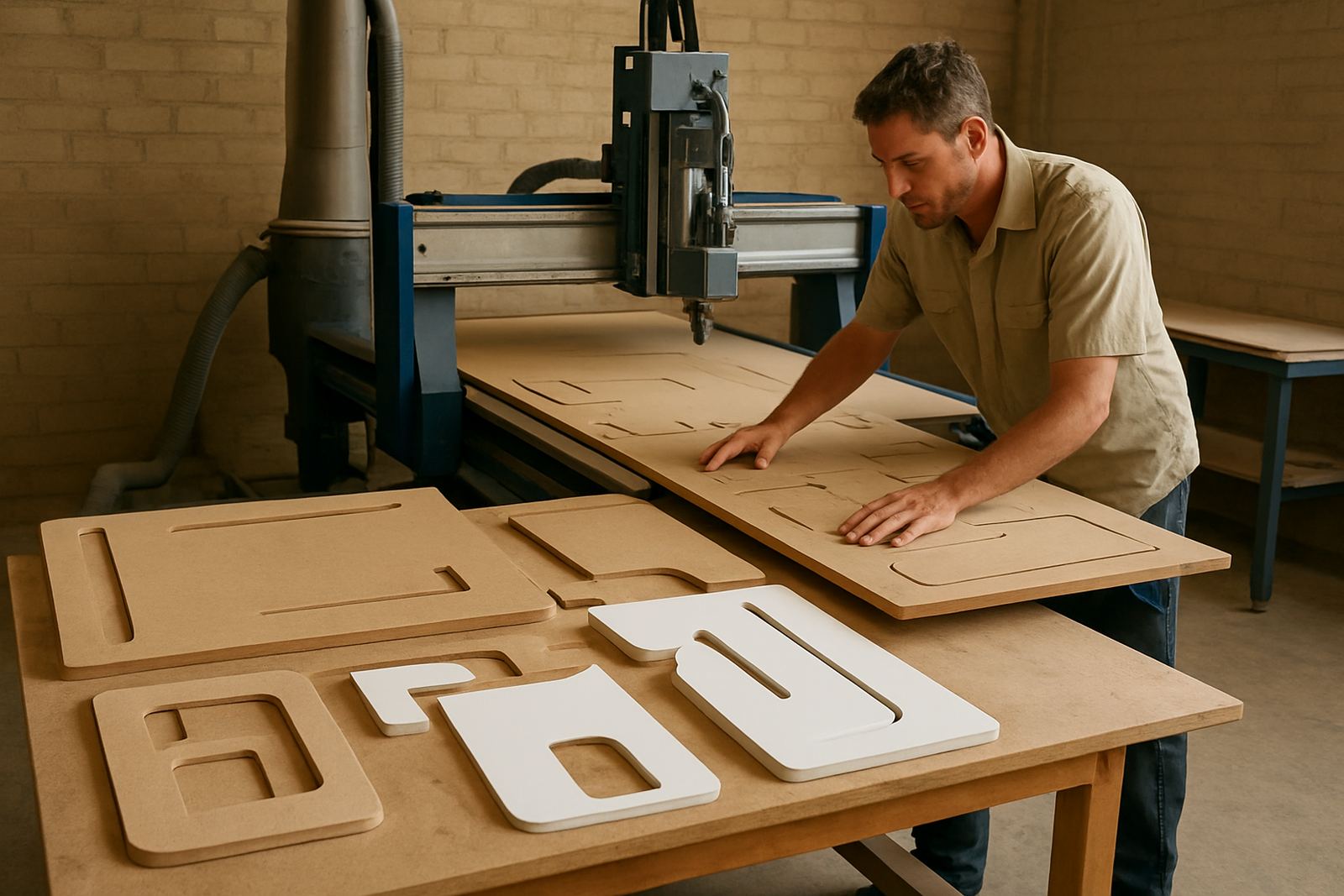
The client was a small but busy prototype workshop in Kimberley that builds display pieces, presentation mock-ups and form studies for local manufacturers and trade clients. Their manual foam cutting was slowing them down, especially on bigger parts that had to match drawings closely and still look neat for sign-off. They needed a practical foam cell that could handle larger visual mock-ups without taking over the whole shop floor.
The brief was simple enough on paper: shape expanded foam cleanly, keep the process easy for operators, and fit the machine into a workshop that already had mixed work flowing through it. They also wanted guidance on tooling, dust control and day-to-day setup so the team could use the system from week one without a lot of trial and error.
What made this job tricky
The biggest constraint was space. The workshop had enough room for a router cell, but not much extra for bulky handling gear or loose stock piling up around the machine. The client also had to work around hot, dry Kimberley conditions, which meant keeping dust under control and making sure foam offcuts did not spread through the rest of the shop.
There was also a timing issue. The team wanted the foam capability in place before a run of presentation work due in the next month, so the installation had to be planned carefully. They needed a solution that could be commissioned quickly, with clear operator steps and enough leeway for future work on larger templates and cut-outs. The electrical supply was checked in advance, and we allowed for clean routing of cabling, extraction and table access.
- Available floor space: compact workshop bay with shared access
- Material focus: expanded foam for larger mock-ups and forms
- Site conditions: dust, heat and frequent handling of light stock
- Target output: cleaner edges, better repeatability and faster turnaround
The foam cell we supplied
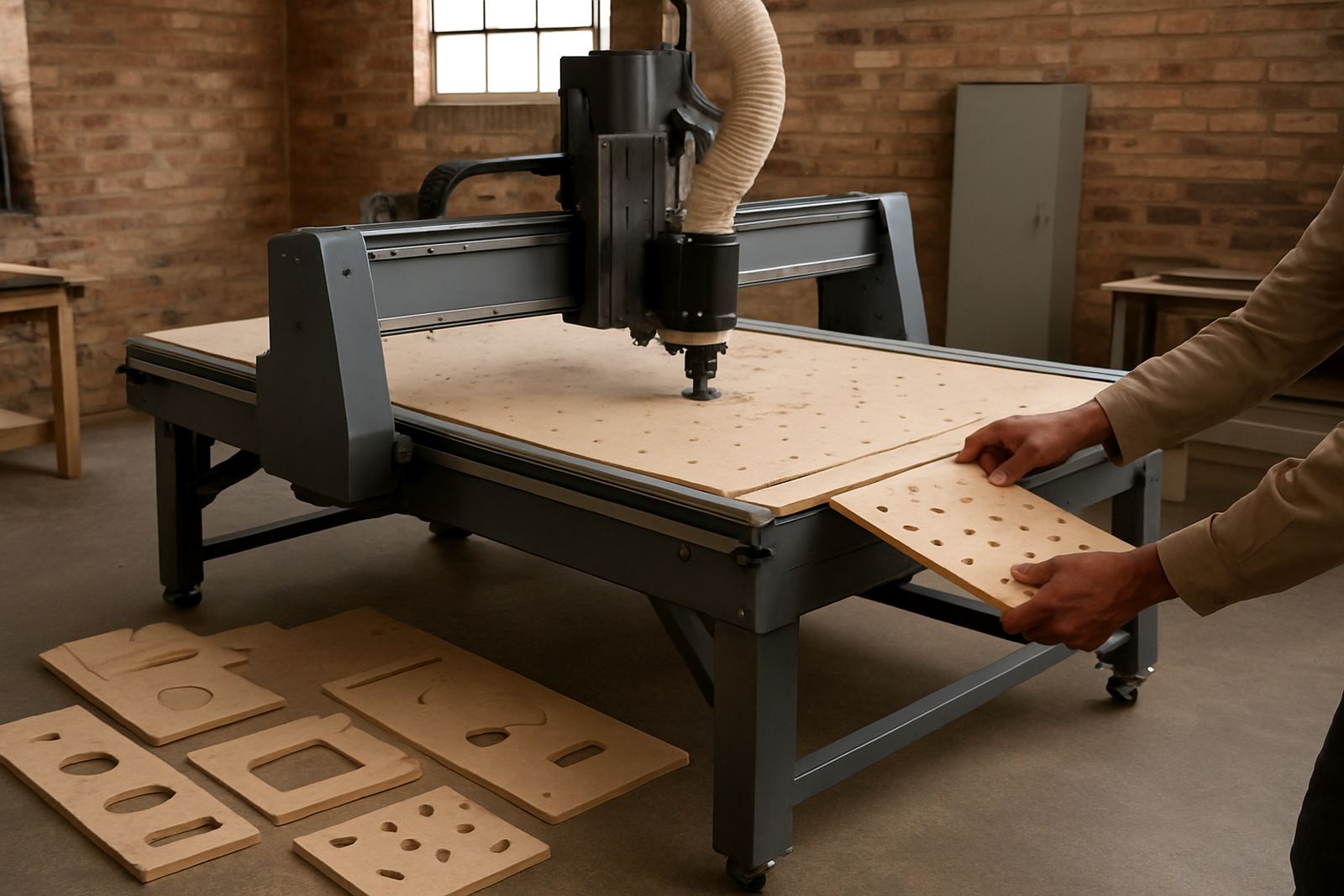
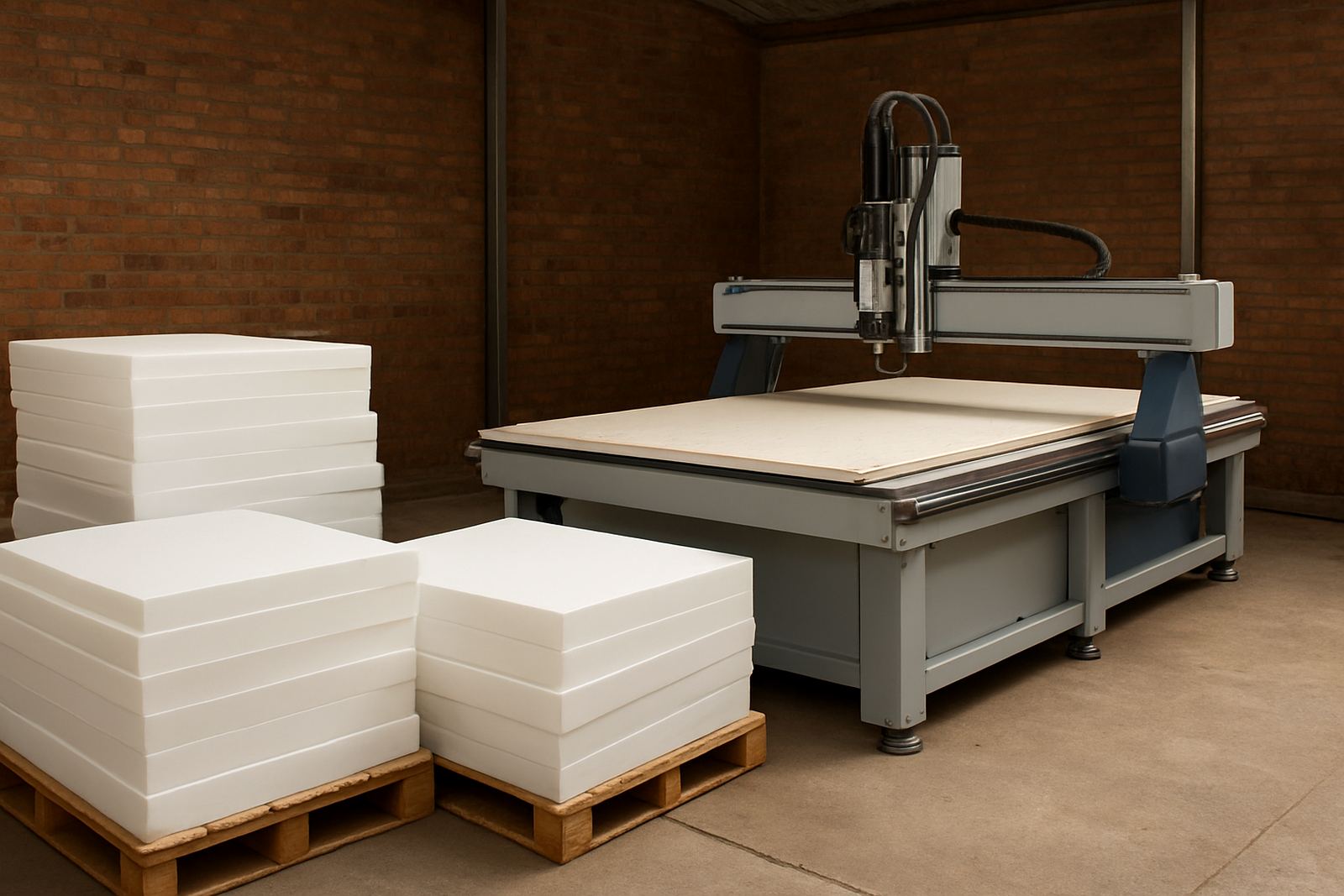
We supplied a CNC router-based foam cell sized for workshop use, with a working area suited to larger presentation parts and nestable sheets. The table was configured for light material handling and the control setup was kept straightforward so the operators could learn the machine quickly. We also covered practical tooling choices for foam, including cutter selection and feed guidance to reduce tearing and surface damage.
The cell included the essentials needed for day-to-day production: machine setup, controller orientation, vacuum leak checks, tool height checks and a dust extraction balance suitable for foam work. The client also wanted the option to move between flat sheet cutting and shaped mock-up work, so we set the process up around simple job changeovers and repeatable start-up checks.
- Machine type: CNC router cell for foam shaping and nesting
- Application: larger visual mock-ups, display forms and templates
- Setup: operator-friendly control layout with practical job changeovers
- Support items: tooling notes, dust balance, backups and training
Installation and commissioning over three weeks
The project ran over three weeks from site survey to handover. In week one we confirmed layout, access points and the power and extraction requirements. That allowed us to finalise the table position and make sure the machine would sit comfortably in the workflow without blocking material movement. Week two covered delivery, positioning and the physical installation, including controller setup and alignment checks.
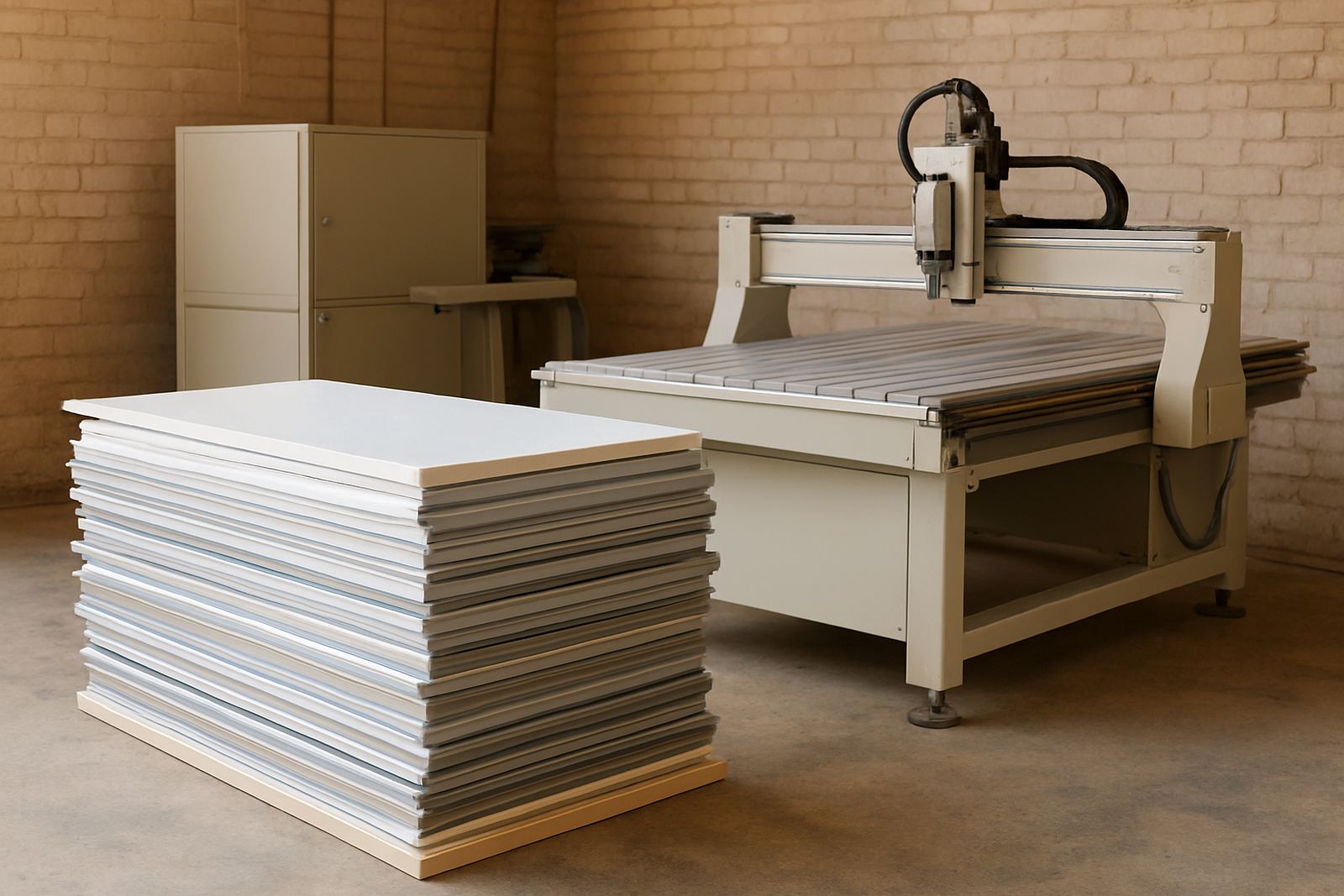
Week three focused on commissioning and training. We ran test cuts on foam sheets of different thicknesses, checked edge quality and adjusted settings until the client had a stable starting point for their main jobs. The operators went through start-up, shutdown and basic care routines, and we left them with clear notes for tooling and regular checks. A missing step on a foam job can waste a full sheet, so the emphasis was on calm, repeatable process rather than speed alone.
- Week 1: site survey, layout confirmation and power planning
- Week 2: delivery, positioning and machine installation
- Week 3: commissioning, test cuts and operator training
What changed after go-live
Once the cell was in use, the workshop could take on larger foam mock-ups with less manual trimming. That made it easier to present full-size concepts to clients and keep changes under control before final approval. The team also found that repeat jobs became much more predictable, because the machine held size better than hand cutting and the same setup notes could be reused.
We saw a few immediate gains. Material waste dropped, finishing time improved and the shop had a clearer separation between rough prep and final shaping. There was less dust drifting into nearby work areas too, which mattered in a busy mixed-use workshop. For a team in a place like Kimberley, where transport and lead times can add pressure, being able to produce clean foam parts on site made a real difference.
- Cleaner edges on larger foam parts
- Less manual rework before client sign-off
- Better repeatability on recurring mock-ups
- Reduced handling time and tighter job flow
What we would carry forward on a similar foam-cutting project
We would repeat the same approach on another foam project: keep the machine selection honest to the real workload, plan the extraction early, and train the operators on the jobs they will actually run. Foam cutting can look simple, but it still needs the right cutter, the right speeds and a sensible setup if you want consistent results. That is especially true in South African workshops where load-shedding, shared machines and limited space can interrupt a poor setup very quickly.
For a future version of this project, we would again recommend a quick site audit, practical tooling notes and a short follow-up after the first few weeks of use. That gives the team time to raise small issues before they become production problems. It also helps with local realities like power changes, dust build-up and staff rotation. The Kimberley foam cell worked well because it matched the workshop, not the other way round.
- Match machine size to actual sheet sizes and handling space
- Set extraction and dust control before full production starts
- Keep operator notes short and job-specific
- Review the first month of work and adjust tooling where needed
Support from Germiston to the Northern Cape
This project also showed how we work across South Africa from our Germiston base. The client had access to practical support before and after installation, with clear contact points for training, service and spare parts. For shops outside Gauteng, that combination matters because it shortens the gap between a machine arriving and a machine earning its keep.
MultiCAM handles machine installation, commissioning, preventive maintenance, spindle service, vacuum leak checks, controller backups, operator training, tooling setup, machine relocation and dust system balancing. For this Kimberley job, the right mix of planning and on-site work helped the workshop add foam capability without disrupting the rest of its operation.
- Based in Germiston with installs across South Africa
- Support areas include Johannesburg East, Midrand, Pretoria East, Durban North and Cape Town North
- Team contact for the project used sales, applications and service input
Key facts
| Project | Kimberley Foam Cell |
|---|---|
| Client type | Prototype workshop |
| Town | Kimberley |
| Application | Foam shaping for larger visual mock-ups |
| Timeline | 3 weeks from survey to handover |
| Core support | Installation, commissioning, training and tooling setup |