Workshop brief from a growing plastics team
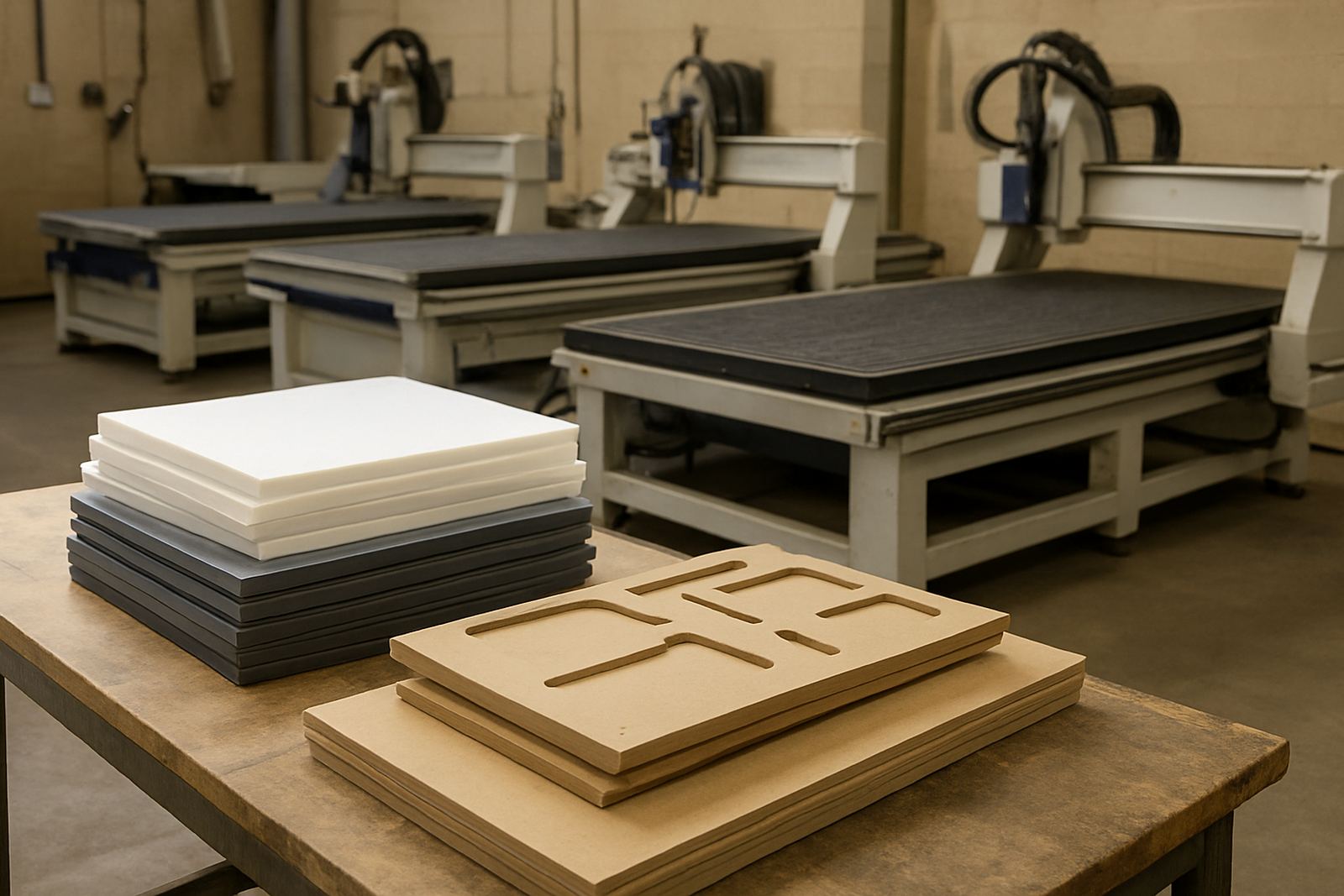
The client was a plastics workshop in Stellenbosch handling display parts, machine guards, jigs, point of sale panels and cut-to-size sheet work. Their team was already productive, but the mix of full sheets, offcuts and repeat orders was creating inconsistency on the nesting side. One job would fit neatly, the next would leave too much waste or force extra hand trimming.
The brief was clear: improve cut repeatability, make nesting easier across different sheet sizes, and keep the setup practical for a small team working in a Western Cape environment. They also wanted a machine that could cope with regular plastics work without needing constant adjustment. With coastal humidity in the region and frequent workshop dust, the system had to stay stable and be simple for operators to use day after day.
- Material mix included acrylic, PVC sheet, HDPE and other common plastics
- Sheet sizes changed often, so the nesting workflow had to stay flexible
- The team needed good access for loading, unloading and edge cleanup
What was limiting output before the upgrade
Before the project, the main pain points were small variations in cut quality, less efficient sheet use and time lost checking dimensions by hand. The workshop also had to work around dust collection that was not balancing well across the cutting area, which affected finish quality on longer runs. In practical terms, that meant more operator attention and more time spent correcting parts before assembly or dispatch.
The client did not need complicated features they would never use. They needed a dependable CNC router with enough bed size for mixed panel work, sensible controls and tooling that suited plastics rather than generic cutting. They also wanted guidance on safe speeds and feeds, because plastics can heat up quickly if the tooling choice or spindle settings are off. That is where clear setup advice makes a real difference.
- Need for accurate nesting on mixed sheet formats
- Reduced edge melt and cleaner tool paths on plastics
- Simple operator training for a small production team
Machine selection and workshop fit
We recommended a CNC router package suited to medium duty plastics work, with a bed size that could handle standard sheet goods and still leave room for efficient nesting. The setup included a vacuum table arrangement, practical spoilboard planning and tooling notes for the materials they cut most often. We also looked at dust extraction flow so the router area would not clog up during longer shifts.
The machine specification was chosen to keep the workshop productive without overcomplicating maintenance. A stable gantry, controlled spindle use and operator friendly controller layout were important. So was access to straightforward backing up of programs and settings, because a workshop that loses a file on a Friday afternoon does not want to start again from scratch.
- Router format suited to sheet-based plastics production
- Vacuum hold-down set up for mixed nesting layouts
- Tooling notes prepared for plastics cutting, trimming and profiling
Installation and commissioning in four weeks
The project ran over four weeks from final machine confirmation to handover. Week one covered site checks, power and layout planning, along with dust system sizing and floor access. Week two was installation and alignment. Week three focused on commissioning, test cuts and controller setup. Week four covered operator training and final tweaks to nesting and toolpaths.
During commissioning we worked through sample sheets, checked edge finish on different thicknesses and adjusted vacuum zones to suit the most common board sizes. The team also received backup guidance for their controller settings and basic checks for spindle condition and table cleanliness. A small typo here or there in the notes would have cost time, so the process was kept simple and repeatable.
- Week 1: site survey and technical planning
- Week 2: machine installation and alignment
- Week 3: commissioning and test cutting
- Week 4: operator training and handover
Results on cut quality and nesting
Once the machine was in daily use, the workshop saw steadier cut consistency across both full sheets and smaller offcuts. Nesting became easier because the team could plan jobs around the actual available material rather than forcing every order into the same pattern. That reduced waste and made it easier to take on mixed work without hesitation.
Part finish also improved, with less hand cleanup needed after routing. For plastics, that matters. Clean edges save time in assembly and make the end product look more professional before it leaves the workshop. The team said the biggest benefit was not only speed, but predictability. They could tell earlier in the day whether a cutting schedule would hold, and that made planning far simpler.
- Better sheet utilisation across standard and odd sizes
- More consistent edge finish and fewer rejected parts
- Less time spent on manual trimming after cutting
What we would do again for a similar plastics workshop
If we were setting up the same kind of workshop again, we would keep the focus on practical nesting, operator training and dust system balance from day one. Plastics work looks straightforward, but it rewards careful setup. A machine can be technically capable and still underperform if the tooling, hold-down and feed settings are not matched to the material.
We would also repeat the habit of commissioning with the actual sheet sizes used in the shop, not just sample cuts. That gives a clearer picture of how the machine behaves under normal production pressure. For workshops in Stellenbosch and across South Africa, the most useful result is a system that keeps cutting reliably even when the day gets busy and the jobs change quickly.
- Set up using real production sheet sizes
- Train operators on tooling, hold-down and backups
- Balance dust extraction before pushing for higher output
Key facts
| Client type | Plastics workshop in Stellenbosch |
|---|---|
| Machine type | CNC router for sheet cutting and nesting |
| Materials | Acrylic, PVC sheet, HDPE and related plastics |
| Project timeline | 4 weeks from site check to handover |
| Key services | Installation, commissioning, training and dust balancing |
| Region | Stellenbosch, Western Cape with support from Germiston and national service |
| Founded | 2007 |