What door manufacturers ask a CNC router to do
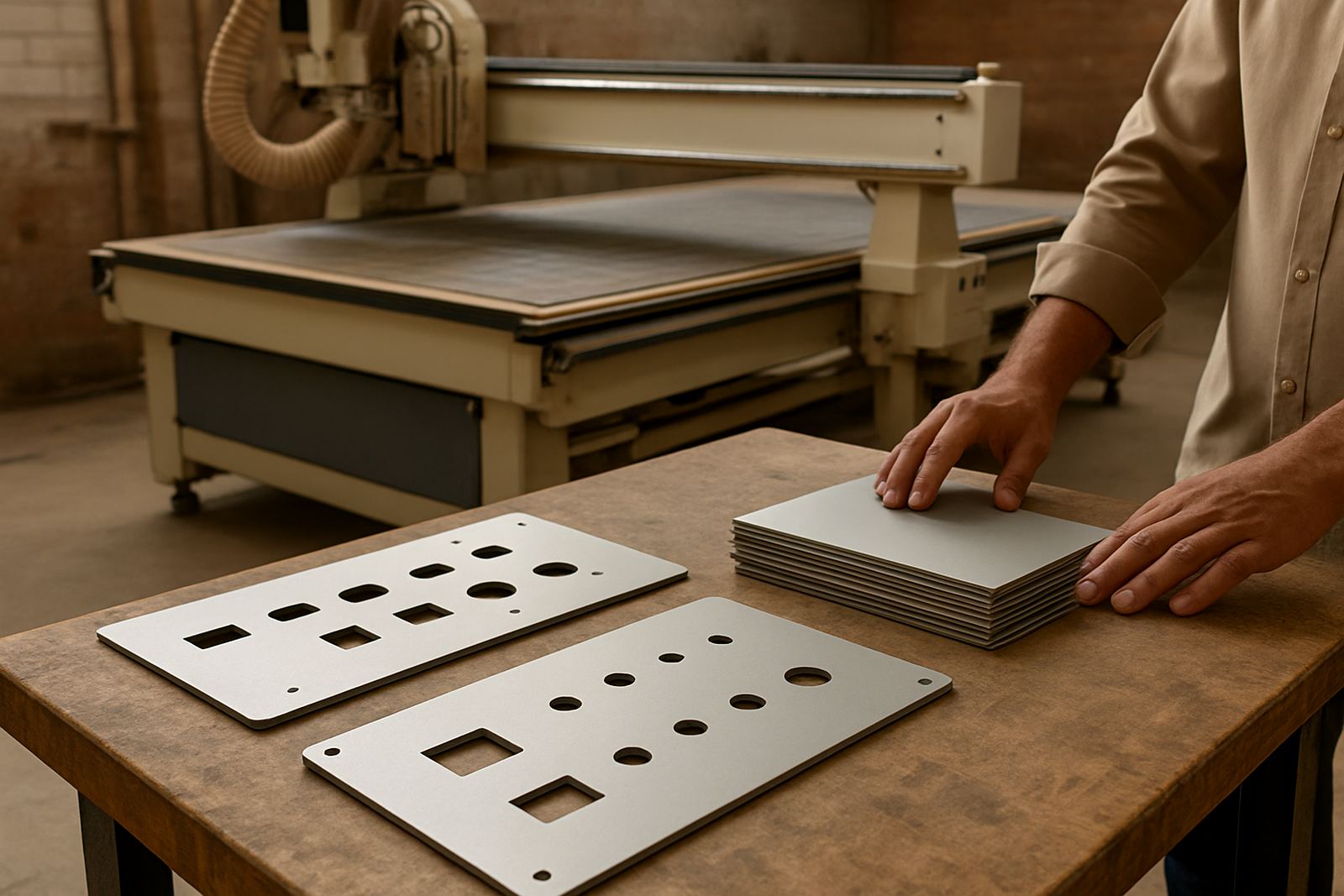
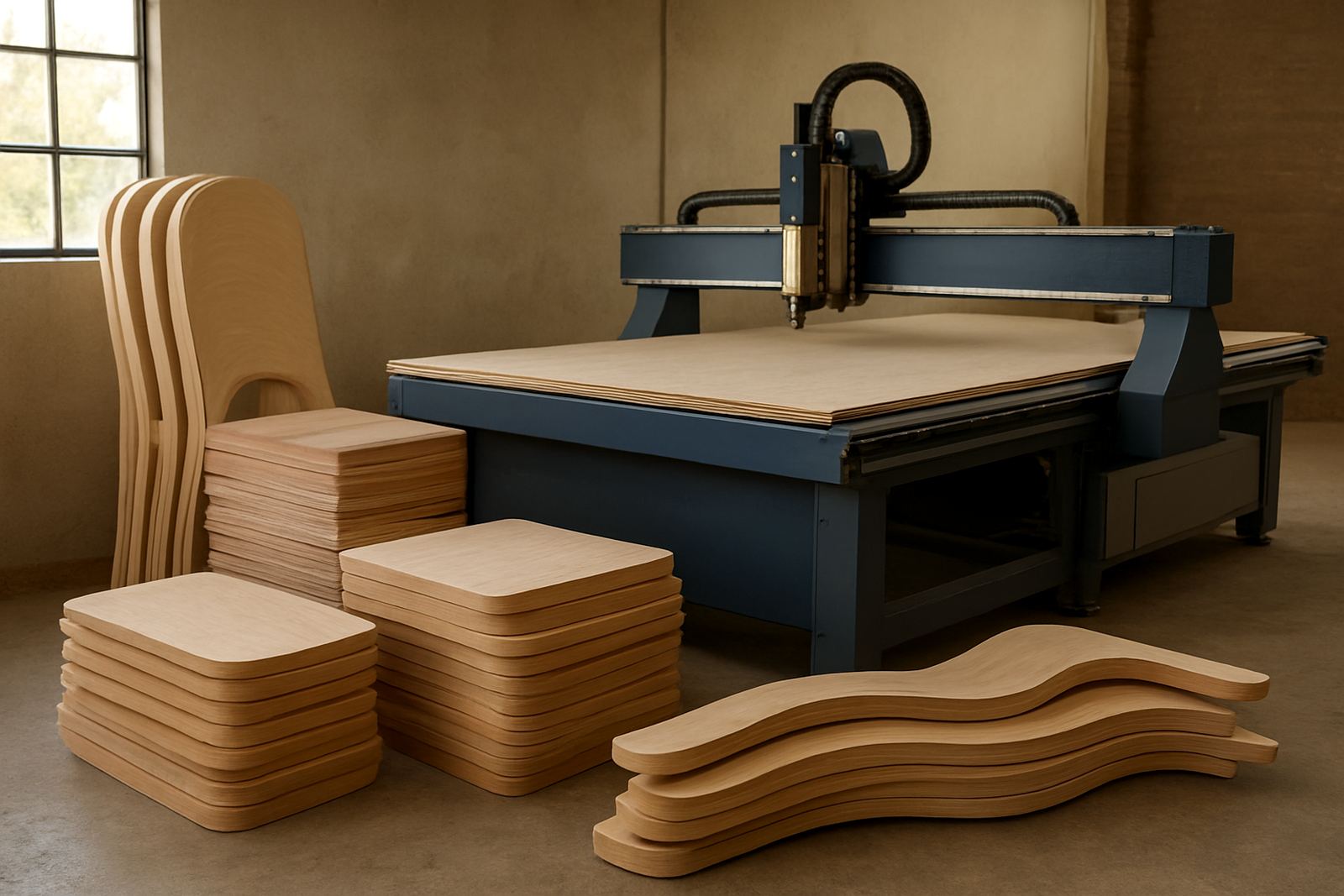
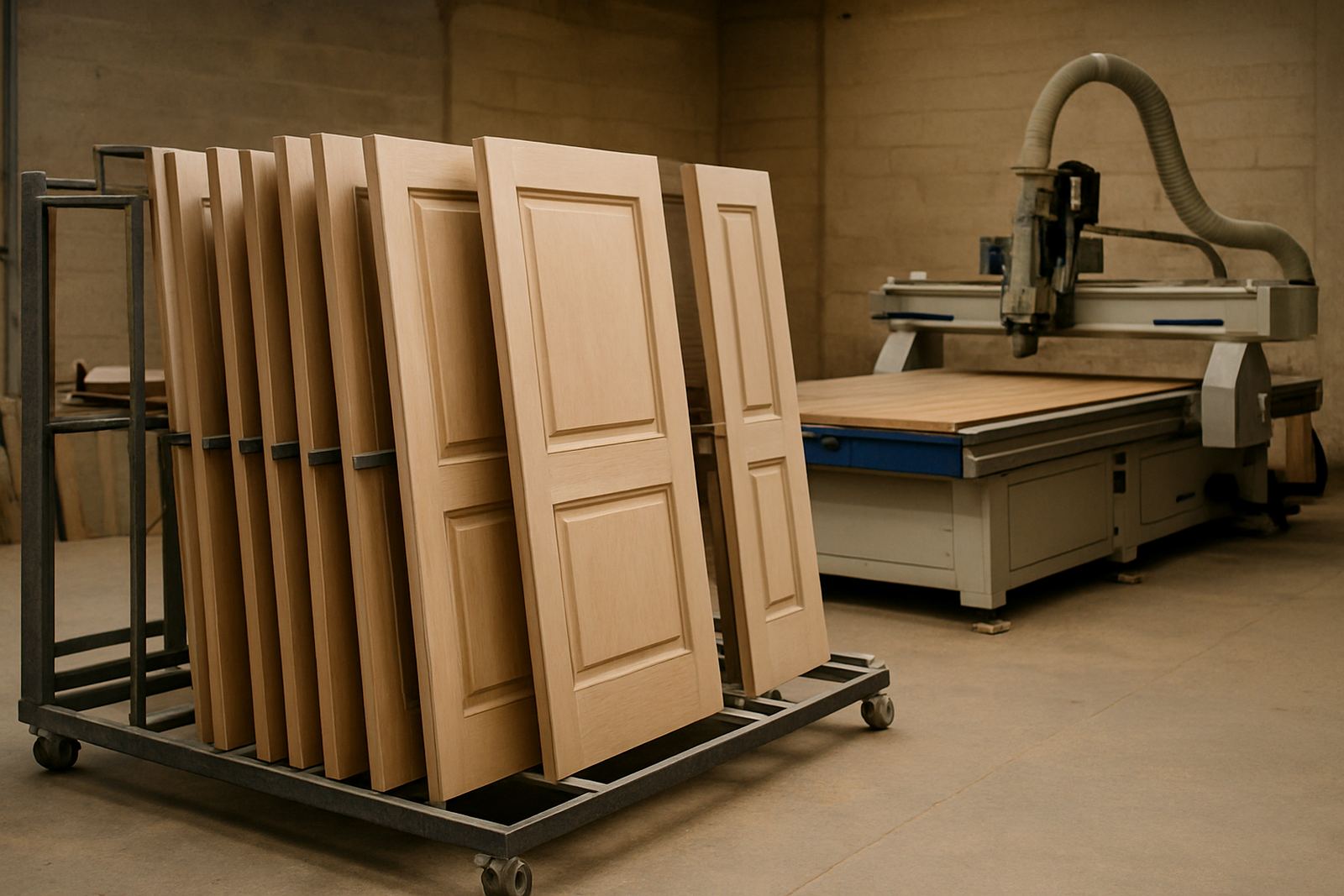
Door production is rarely one job. A single shift can include outer skins, core pockets, lock and handle openings, hinge recesses, panel grooves, rebates and repeat trimming on MDF, solid timber, melamine faced board or PVC sheet. The router has to keep cut size, edge quality and registration steady even when the workshop is busy and the material stack changes. If the cutting path drifts by even a little, the fit-up problem only shows later at assembly.
For many local producers, the value of CNC comes from repeatability. One set of drawings can be turned into many matching parts with fewer manual marks and less rework. That matters when you are supplying housing projects, shopfitting jobs or contract door runs where every minute on the machine and every square metre of sheet stock count.
- Consistent skin cutting and panel profiling
- Grooves for flush panels and decorative detail
- Door hardware pockets and hinge recesses
- Nested cutting for better sheet use
Equipment sets that suit door shops in Gauteng and beyond
For entry level door work, a well specified single table router can handle panel parts, small runs and custom orders. Workshops that cut many full sheets often move to a larger bed size with vacuum hold-down and a dust hood that clears chips fast enough for long shifts. Where output is higher, a production cell with loading support, stronger vacuum zoning and a clear offload area gives better flow and less handling damage.
Door producers usually get the best results when the machine, tooling and extraction are planned together. A good vacuum table keeps thin skins stable. The right spindle speed and cutter type reduce edge burn on timber and fray on board. Dust extraction matters a lot in Johannesburg and Germiston workshops, where dry air and fine dust can build up quickly, and at the coast where humidity can affect board storage and suction performance.
- Entry router for custom doors and smaller workshops
- Larger nesting table for sheet based door lines
- Vacuum pump sized for porous and non porous materials
- Dust extraction and filtration suited to daily cutting
- Tool setting and backup procedures for repeat jobs
Factory layouts that keep door production moving
Door manufacture works better when the router sits near board storage, edge finishing and assembly, but with enough space for safe sheet movement. A straight path from offload to stacking makes a difference when sheets are heavy and the team is busy. If the machine sits in a cramped corner, operators spend more time turning panels than cutting them. Leave room for vacuum pumps, extraction ducting and a service side where the technician can reach the spindle, rails and electrical cabinet.
Power quality and floor conditions also need attention. Load shedding, voltage dips and generator changeovers can upset controllers if the system is not protected. On the floor, dust and offcuts should not block the vacuum lines or create trip points. In some municipal areas, dust discharge and noise can affect operating hours, so it is worth checking local by-laws before finalising the layout.
- Plan infeed, cut area and offload in one clean flow
- Keep extraction runs short and easy to inspect
- Allow access for spindle service and belt checks
- Use stable power protection and controller backups
Common mistakes in door cutting jobs
One common mistake is choosing a machine only by table size and not by the actual door mix. A workshop cutting mostly full sheets needs a different setup from one doing many narrow stiles, rails and one off specials. Another mistake is under sizing the dust system. When chips sit on the table or in the grooves, cut quality drops and parts need cleaning before the next operation. A third issue is using the wrong tooling for the board or timber grade, which leads to tear-out, heat marks or dull edges sooner than expected.
Operators also need clear setup notes. If a door file is changed without checking the tool length, clamp heights or vacuum zones, the job can scrap a full sheet before anyone notices. Training should cover basic controller use, tool changes, safe homing and what to do after a power interruption. That is especially useful in South African workshops where the day can be broken by outages or a generator restart.
- Do not oversize the machine and starve the tooling budget
- Do not ignore dust extraction and vacuum leaks
- Do not run wet or badly stored board through a dry cut line
- Do not leave setup notes in one person’s head only
Budget ranges for door manufacture systems
Budget depends on cut size, vacuum strength, controller style and how much support equipment is included. For a smaller workshop doing custom doors and occasional runs, a practical entry setup may start from about R450 000 to R900 000 depending on table size and tooling. A mid range production setup for steady sheet nesting and repeat door parts can sit between R900 000 and R1.8 million. Larger cells with stronger vacuum zoning, handling support and more automation can move beyond R2 million.
It is wise to budget for the full working line, not only the machine. Tooling, extraction, compressor requirements, power protection, spare cutters and installation time all affect the final figure. If the shop handles moisture sensitive board or works near the coast, storage and climate control may also need attention. A cheaper machine can cost more later if it cannot hold size or keep running through a normal shift.
Support that keeps the door line moving
Door makers usually need support after the machine is on site, not just at purchase. Commissioning, operator training and preventive maintenance help the team settle into a repeatable process. Vacuum leak checks and dust system balancing are particularly useful where the machine is running long nested sheets all day. Controller backups also save time when a card fails or a file is lost after a power event.
MultiCAM works from Germiston and supports door manufacturers across South Africa through installation, relocation, spindle service, tooling setup and service coordination. That local response matters when a machine is holding up cutting for a housing run or a customer’s fitment date is near.
- Machine Installation and Commissioning
- Preventive Maintenance and Spindle Service
- Vacuum Leak Checks and Dust System Balancing
- Operator Training, Tooling Setup and Controller Backups
- Machine Relocation across major South African centres