When cabinet parts need to come off the board cleanly
Furniture component work is about more than cutting shapes. A good setup has to handle carcass sides, shelves, drawer parts, toe kicks, backs and fronts in a way that keeps every hole, slot and edge in the right place. For many South African workshops the pressure comes from thin margins, fluctuating board supply and clients who want quick turnaround on custom units. That is where nested cutting makes a real difference.
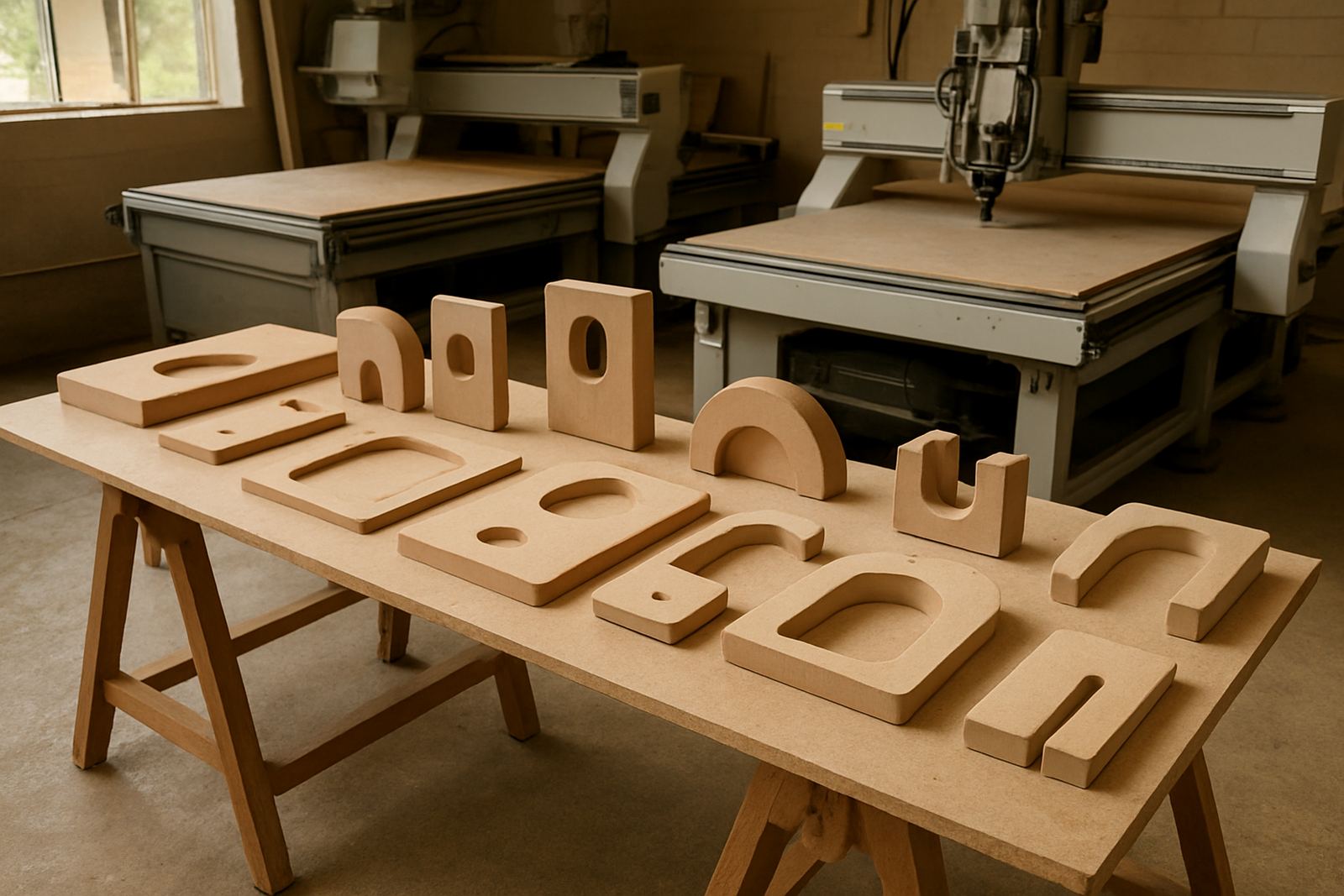
With the right CNC router, a furniture shop can move from hand marking and repetitive drilling to a process that nests parts tightly on each sheet, cuts them consistently and reduces trimming later. That means better yield from particle board, MDF, melamine and plywood, plus fewer errors when a job repeats a week later. In Germiston, Randburg or Durban North, where labour and floor space are both under pressure, this efficiency matters.
- Nested shapes reduce waste on full sheets
- Drilling and slotting stay consistent across batches
- Parts match better for assembly and edging
- Operators spend less time correcting small errors
Typical machine set for furniture component production
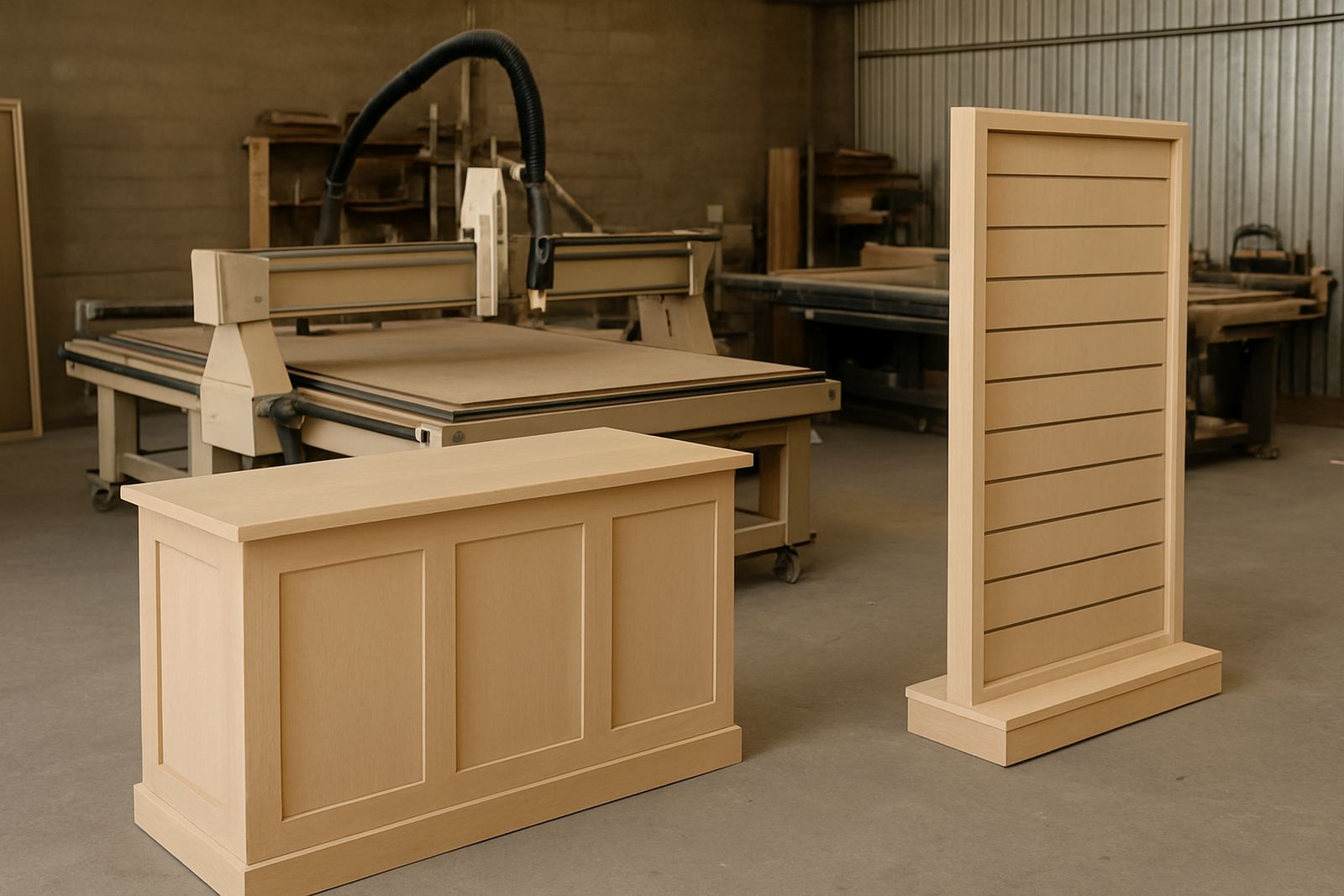
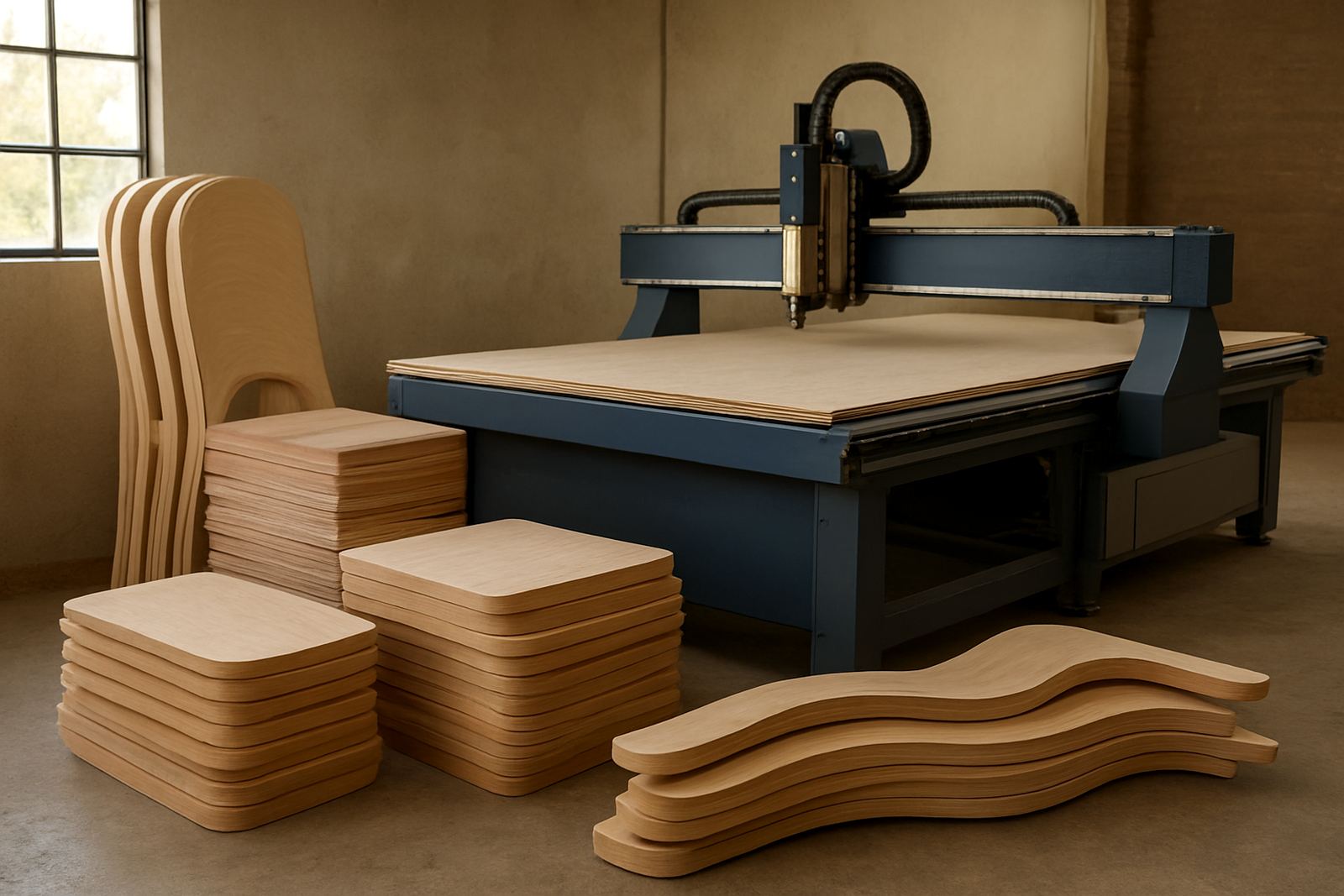
Most furniture shops do well with a CNC router sized to their board format, plus a dust extractor, vacuum table and the right tooling. For entry level work, a single gantry router with a solid spoilboard can manage kitchen carcasses, wardrobe panels and simple display units. For higher volumes, a vacuum table and automatic tool change make a big difference when you are running nested sheets, drilling and profiling in the same shift.
MultiCAM supplies machine options that fit both small and growing workshops. The main choice is usually between a straightforward production router and a more advanced system with better automation. The right answer depends on how many sheets you cut per day, whether you do mostly straight cabinet parts or more shaped panels, and how much manual handling your team can manage. In humid coastal areas, sealing and maintenance also matter because board movement and workshop dust can affect accuracy over time.
- Router size matched to 2440 x 1220 mm or 3050 x 1220 mm sheets
- Vacuum hold-down for full-sheet nesting
- Drilling head or dedicated tooling for confirmat holes and dowel work
- Dust extraction and table zoning for cleaner cutting
- Controller backup and clear operator routines
Layout and planning advice before the machine arrives
A furniture CNC only works well if the workshop flow makes sense. The board store, cutting station, edgebanding area and assembly space should not force the team to carry panels across tight corners or past other jobs. Leave enough clear space at the infeed and outfeed sides for full sheets and finished nests. In smaller premises around Johannesburg East or Midrand, that planning can save a lot of walking and a few damaged panels.
Power supply is another practical point. Some workshops run on limited municipal supply, while others must work around load-shedding with backup systems. The machine, vacuum pump and dust extraction should be planned as a set, not separately. If the pump is underpowered or the dust lines are too long, cuts can start lifting and the board edges get messy. It is also worth checking floor level, compressed air availability and safe cable routing before installation.
- Measure sheet paths and turning space for full boards
- Place the dust system where hose runs stay short
- Plan for power stability and controlled shutdowns
- Keep the offcut area clear so operators do not stack waste near the machine
Common mistakes that cost time and board
One of the biggest mistakes is choosing a machine only on bed size and forgetting the real job mix. A router that is too small may fit the room but not the sheet format, which leads to awkward loading and poor nesting. Another common problem is weak tooling selection. If the cutter is wrong for melamine or plywood, the finish can chip at the top surface or burn on the edge, and that means extra sanding or rework.
Another issue is skipping vacuum checks. A workshop may think the machine is underperforming when the actual problem is a leak in the table, poor gasketing or a dirty seal. In some cases the real fault is operator setup, not the router itself. This is where practical training helps because a good operator knows when to stop and check hold-down before the next sheet goes in. Small mistakes repeat quickly in furniture work, so the cost adds up fast.
Common trouble spots include:
- Using the wrong cutter for coated boards
- Poor nesting that leaves too much waste between parts
- Skipping controller backups before changes
- Ignoring dust build-up under the table
- Relocating a machine without checking levelling again
Budget ranges for furniture component workshops
Budgets in this space vary a lot, but it helps to think in three levels. An entry CNC router for a small furniture maker may start around R350,000 to R650,000 depending on table size, vacuum option and tooling needs. A mid-range production setup with better hold-down, stronger motion control and practical automation can sit between R750,000 and R1.6 million. Larger nested production cells with loading support, more tooling and integration around dust and workflow can move beyond R2 million.
Those figures should also include installation, commissioning, operator training, first tooling and any site changes needed for power or dust extraction. If a workshop is replacing manual panel cutting, the return often comes from better board yield, fewer re-cuts and faster output per shift. In cities like Pretoria East, Cape Town North and Durban North, local support and quick parts supply can matter just as much as the machine price.
MultiCAM also helps teams plan for the ongoing costs: service intervals, spindle care, vacuum leak checks, controller backups and replacement tooling. That keeps the machine working when orders are busy and the floor cannot afford downtime.
How MultiCAM supports furniture shops after installation
Furniture production is not a one-day setup. Once the machine is in place, the workshop still needs steady support so the output stays accurate. MultiCAM assists with machine installation, commissioning, preventive maintenance, spindle service, machine relocation and dust system balancing. The team also helps with tooling setup and operator training, which is useful when a workshop hires new staff or changes product lines.
With Germiston support and coverage into Johannesburg East, Midrand, Pretoria East, Durban North and Cape Town North, the focus stays on keeping boards moving. For a furniture shop, that means fewer stops, cleaner parts and more predictable scheduling. If the production team knows the machine, the tooling and the nesting process properly, the whole workflow becomes easier to manage.
For quotes, sizing help or a site discussion, use our contact form and plan the machine around the parts you actually make, not just the ones you hope to make later.