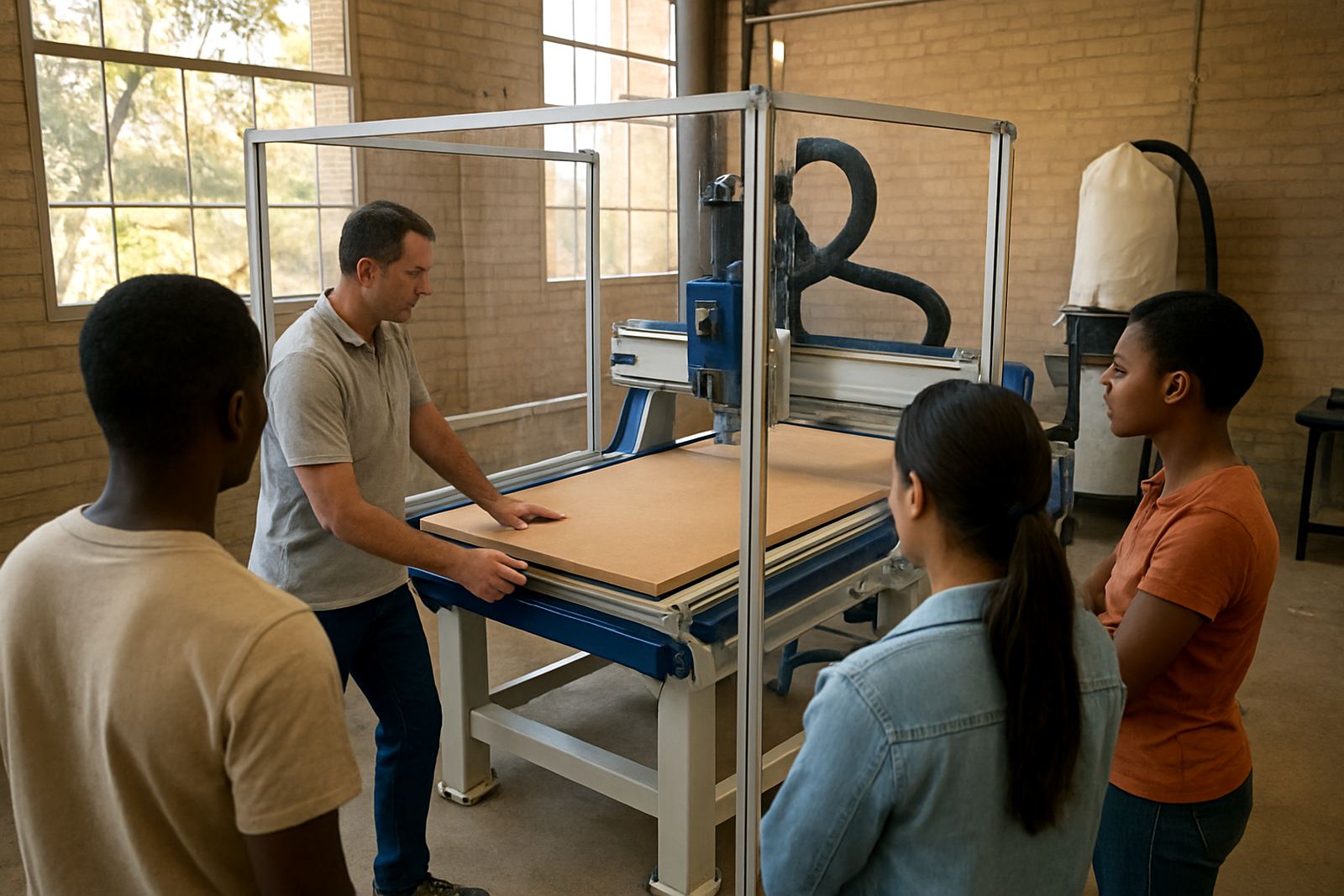
What school workshops need from a CNC router
In a school setting, the machine must support learning without creating avoidable risk or constant stoppages. Teachers need clear controls, predictable start-up routines and equipment that fits the space available, whether the workshop is used for technology, design, woodwork or introductory manufacturing projects.
For many schools in Gauteng, the first challenge is not the cut itself, it is the daily flow around the machine. A router should be easy to supervise from the front, simple to isolate after class and stable enough to handle repeated student use. Dust extraction, tool storage and clear access around the table matter just as much as spindle power.
- Safe operator access and obvious emergency stop points
- Table sizes that match classroom project work, not factory scale
- Controls that are practical for learners to follow
- Dust management that keeps the room usable between periods
Typical equipment for training rooms and maker spaces
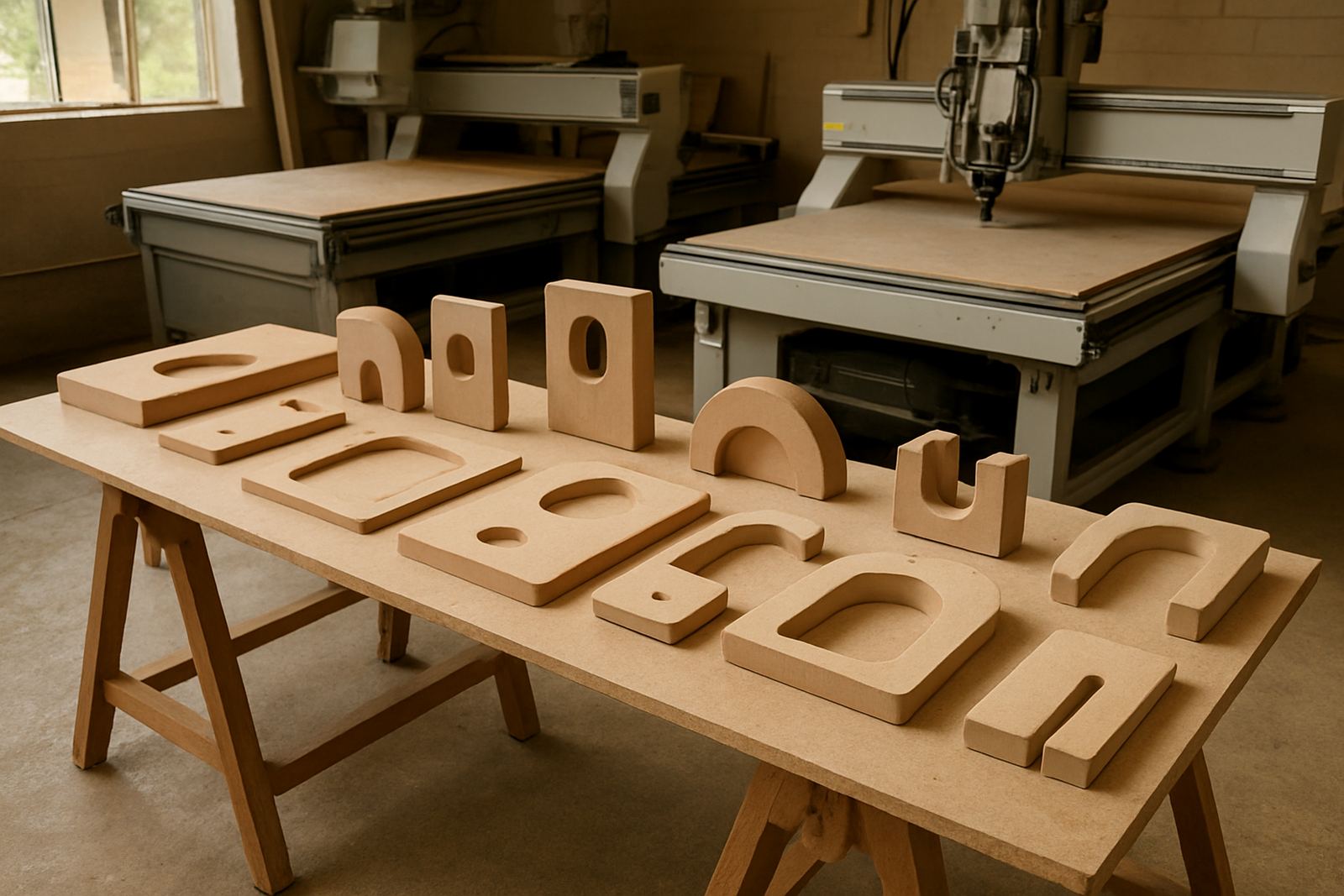
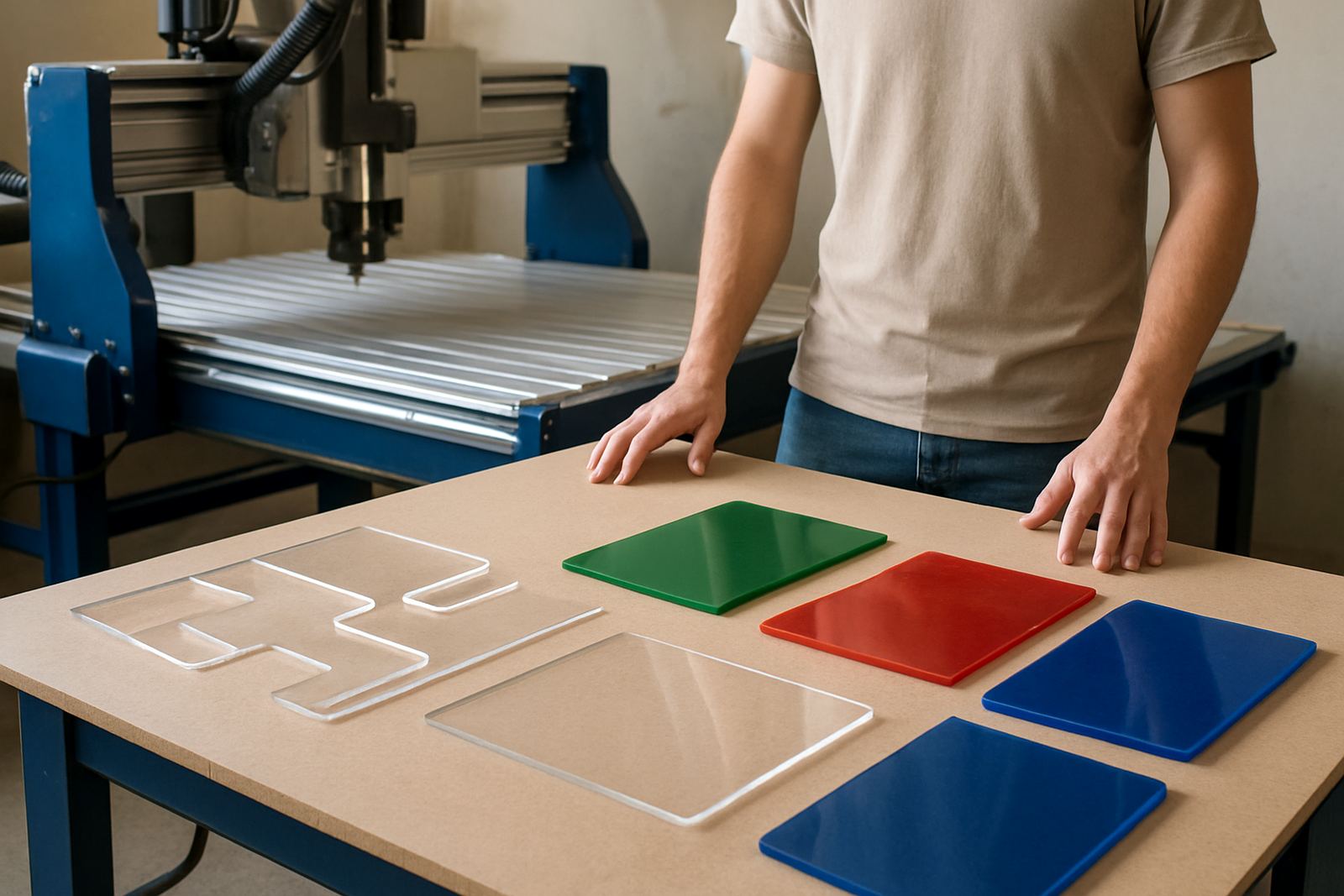
Most school workshops do well with an entry to mid-range CNC router sized for boards, signs, jigs and demonstration parts. Schools that teach design and technology often start with sheet cutting in plywood, MDF, acrylic and similar materials. Some also want light work on soft aluminium for brackets, project boxes or prototypes, provided the tooling and feeds are set correctly.
Useful additions usually include a vacuum table or a well-planned spoilboard, basic dust extraction, a compact compressor where required and a controller layout that is easy for learners to understand. A simple tool storage system also helps staff keep track of cutters and reduce damage from poor handling.
- Entry router for class demonstrations and learner projects
- Vacuum or mechanical workholding depending on budget
- Starter tooling kit for board materials and acrylic
- Dust extraction matched to the actual machine volume
MultiCAM also advises on practical tooling notes, so schools avoid buying cutters that are unsuited to the materials they teach. That saves time and removes a lot of confusion when different classes use the same machine.
Layout planning for safe, efficient teaching
School workshops need enough space for movement, supervision and material handling. The router should not be squeezed against a wall where sheet loading becomes awkward. Leave room for a trolley, offcut storage and a clear walk path around the table. If the room is used by multiple classes, think through how students enter, load and stand back while the cut runs.
Electrical planning matters too. A router, extraction unit and related accessories should be protected by correct distribution and isolation, with attention to local supply quality and load shedding procedures. Where power is unstable, schools should plan for safe shutdown, controller backups and a restart routine that staff can follow without guesswork.
In coastal areas, humidity can affect boards, tooling and stored components, so dry storage is worth planning from the start. In Johannesburg and the East Rand, dust control and simple cleaning routines are often the bigger concern. Either way, the room should be designed for repeatable teaching, not just one-off project days.
Common mistakes schools make before installation
The most common mistake is buying a machine before the room and supervision plan are ready. Schools sometimes assume the router can be placed anywhere, then discover there is no safe loading space, no extraction route or not enough room for learners to stand clear while the spindle runs. Another issue is choosing a machine that is too large for the board sizes actually used in class.
Staffing is another point. A CNC router is straightforward when one or two people understand the setup and routine checks, but school use often changes term by term. That means operator training should include basic setup, homing, tool changes, checking vacuum leaks and what to do after a power interruption.
- Buying for ambition rather than the real workshop footprint
- Skipping extraction and then fighting dust every day
- Using the wrong cutters for student materials
- Not planning who backs up files and controller settings
MultiCAM’s team can help schools avoid these problems with practical commissioning and training, so the machine is ready for learners rather than left underused in a corner.
Budget ranges for school CNC setups in Rand
Budget depends on table size, control package, extraction needs and how much installation support the school wants. For many South African schools, a sensible entry setup starts at about R280 000 to R450 000 for a compact machine with basic accessories. Mid-range training systems often sit between R450 000 and R850 000 when vacuum support, better tooling and stronger dust handling are included.
Schools planning larger project work, multiple bays or more advanced production-style teaching should allow from R850 000 upwards. That can cover a larger router, installation, commissioning, operator training and related workshop systems. Relocation, maintenance plans and future tooling should also be factored in, because the first invoice is rarely the full picture.
It is usually better to choose a reliable setup that teachers can manage consistently than to overspend on capacity that never gets used. A good school machine is one that fits the timetable, the room and the people using it every week.
Support across Germiston, Gauteng and beyond
MultiCAM is based in Germiston and works with schools across South Africa, from Johannesburg East and Midrand to Pretoria East, Durban North and Cape Town North. That matters when a school needs help with installation timing, maintenance planning or spare parts for a busy term schedule.
The team includes Lerato Nkosi in sales, Stefan Naude in technical management, Lesedi Ntanzi in applications, Farieda Adams in service coordination, Mpho Mtshali on installation and Chantel Naidoo on parts and tooling. For school workshops, that mix helps with machine selection, training setup, vacuum leak checks, controller backups, preventive maintenance and spindle service.
For schools, the goal is not just to buy equipment. It is to keep a safe, teachable workshop running with fewer interruptions and a clear plan for the year ahead.