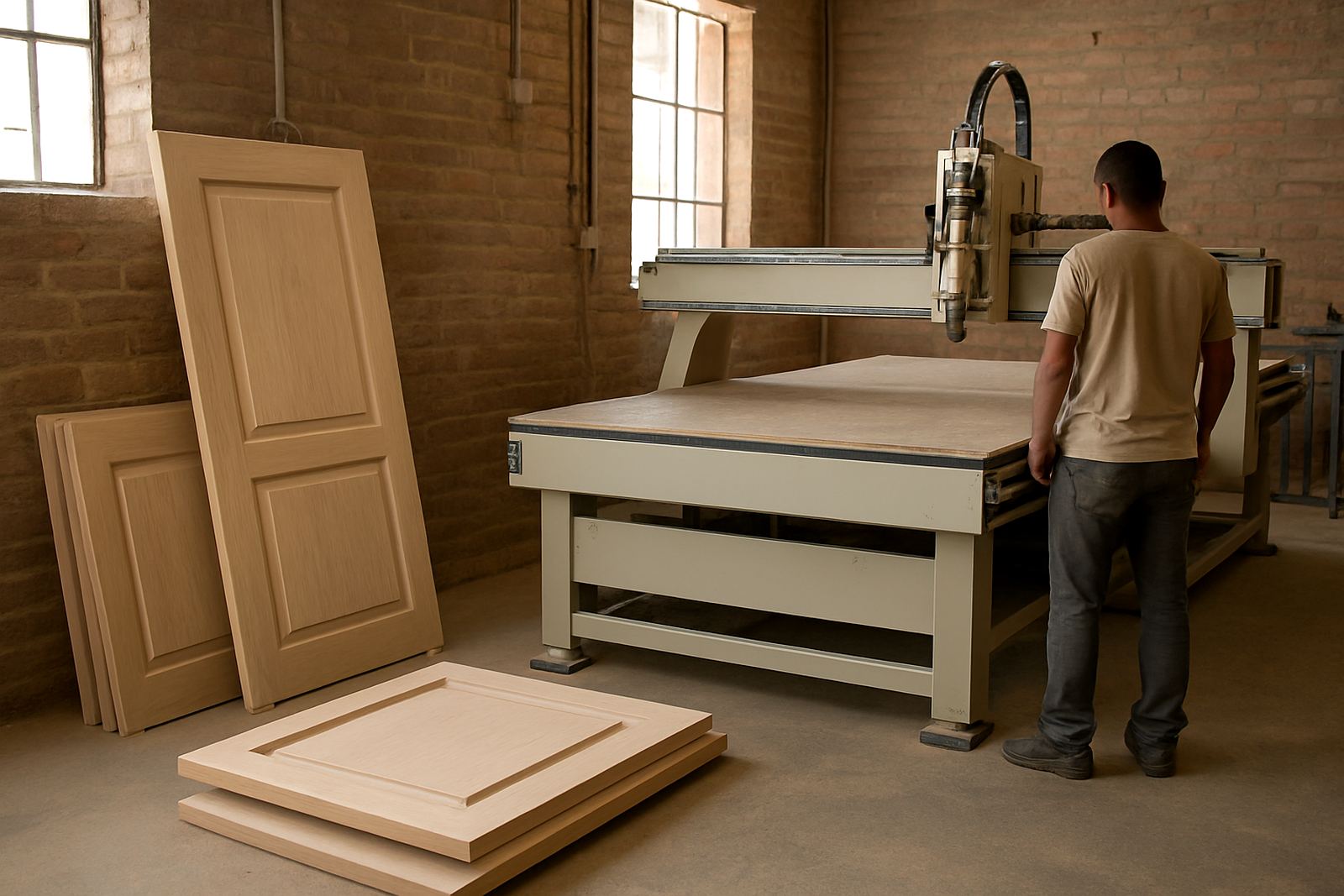
CNC routing for a Cape Town door shop
The client makes fitted doors for residential and light commercial work, with batches that change often and panel sizes that are not always friendly to manual routing. Their team needed a CNC process that could repeat drilling positions, pocket hardware recesses and hold panels properly without wasting time on constant re-clamping.
The brief was simple enough on paper: improve throughput, keep edge quality steady and make it easier for operators to move between jobs. They also wanted the machine to suit a South African workshop where dust extraction, power quality and floor space all matter. In other words, the machine had to behave well on a normal production day not just during a test cut.
- Repeat machining for door panels and associated parts
- Drilling accuracy for hardware and fitting locations
- Vacuum zoning for mixed panel sizes
- Practical setup for a working production floor
Workshop constraints we had to work around
The workshop was busy and space was tight, so the layout had to allow loading from one side with enough room for offcuts and stack handling. Coastal humidity in Cape Town was also part of the discussion, because it affects stored boards, tooling care and the way dust sticks to surfaces. The team did not want a machine that needed constant fiddling or delicate day to day attention.
Power stability and dust management were also raised early. Like many local shops, they work through load-shedding interruptions and need a machine that can be backed up properly, restarted sensibly and kept free from fine dust build-up around guides and control gear. We planned the installation with those conditions in mind and kept the setup straightforward enough for the existing crew to run it confidently.
- Limited floor area and material staging space
- High humidity close to the coast
- Dust control needed to stay practical
- Restart procedures had to suit occasional outages
What we supplied for repeat panel machining
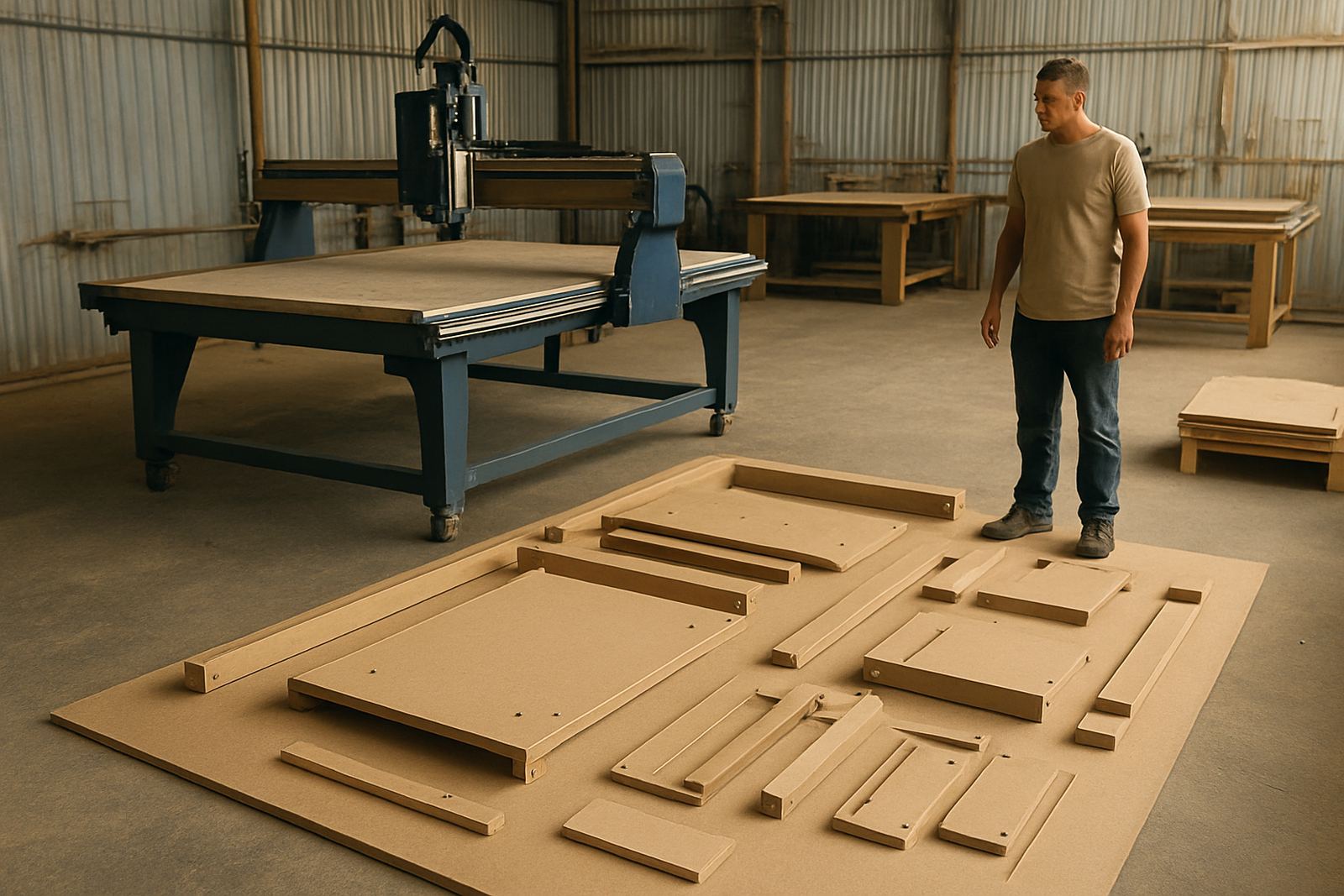
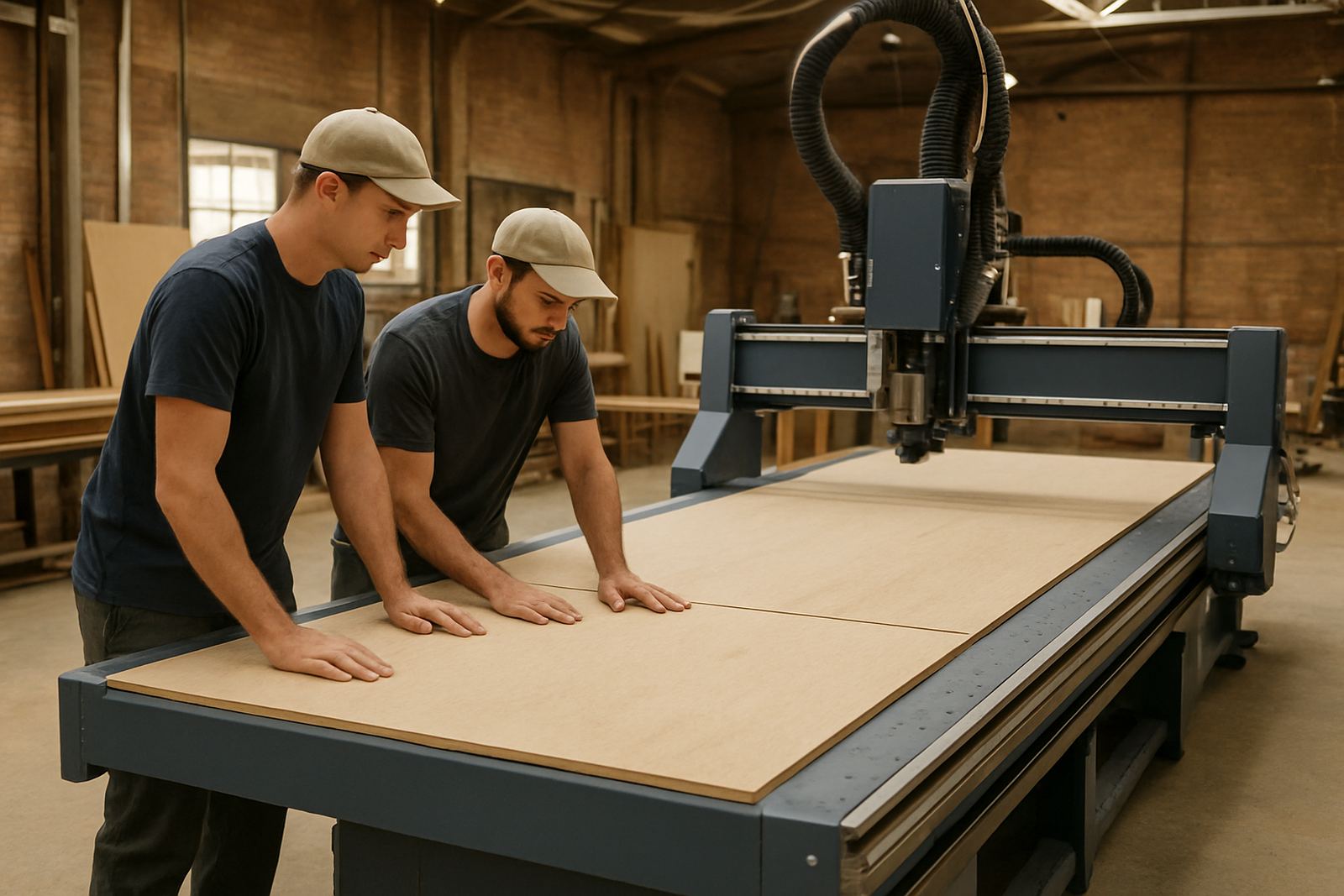
We supplied a CNC router setup suited to panel work, with a table arrangement designed for repeat positioning and vacuum zoning. The key requirement was to hold smaller and larger door components securely without covering unused zones with excessive tape or manual blocking. That makes a real difference when the day includes mixed-size batches.
The machine package included operator-friendly controls, drilling capability for repeat hole patterns and a spindle arrangement set up for panel machining with practical tooling notes from the start. We also specified vacuum zoning logic that allowed the team to switch between full sheets and partial sheets without losing hold-down performance. For a door maker, that is usually the point where the job becomes either easy or a nuisance.
- Vacuum table with multiple zones for mixed panel sizes
- Drilling and routing capability on one machine
- Panel handling suited to doors, stiles and related parts
- Setup guidance for tooling, feeds and hold-down
Installation and commissioning in three weeks
The project moved from order confirmation to handover in three weeks. During week one we confirmed machine placement, power needs and extraction connections. Week two was installation and alignment, including vacuum checks, controller setup and a full review of the first tool set. Week three covered commissioning, sample parts and operator training with the production team.
Our technical manager worked through the machine checks, while applications support set the cutting notes around the client’s typical board stock and drilling patterns. We also backed up the controller, labelled the initial tooling and set a basic service routine so the team would know what to check before a shift starts. It sounds small, but that is what keeps a machine moving day after day.
- Week 1: layout confirmation and utility checks
- Week 2: installation, levelling and vacuum testing
- Week 3: commissioning, sample runs and operator training
- Controller backup and handover notes provided
Results on the floor after changeover
Once the setup was running, the team saw cleaner repeatability on drilling positions and fewer manual corrections at the next station. Panel handling became more predictable because the vacuum zoning matched the job mix instead of forcing the operators to work around the table. The machine also helped reduce the stop-start rhythm that used to happen when the crew had to mark and re-mark every batch.
They were able to move from drawing to finished parts with fewer surprises, and the first production runs showed steadier output through the shift. Offcuts were easier to manage, the operators had a clearer process, and the workshop manager could see where time was being saved. Not dramatic, just proper gains where they count.
- More consistent drilling and routing positions
- Less manual marking and rework
- Improved panel hold-down on mixed batch sizes
- Cleaner flow from nesting to finished parts
What we would repeat on the next door project
We would use the same approach again for another door producer: keep the machine choice practical, match vacuum zoning to the actual batch pattern and spend enough time on tooling setup before production starts. That early work saves hours later, especially when the workshop has to keep moving through a normal South African week with interruptions, rush orders and the odd power cut.
For this client the best part was not only the hardware, but the way the setup matched how the shop really works. The machine is there to support the team, not get in their way. That is the standard we aim for on every installation from Germiston to Cape Town and beyond.
- Match machine size to real floor space, not brochure numbers
- Set vacuum zones around job size and daily changeovers
- Train operators on simple checks and backup steps
Key facts
| Project | Cape Town Doors |
|---|---|
| Client type | Door producer |
| Scope | Repeat panel machining, drilling and vacuum zoning |
| Timeline | 3 weeks from confirmation to handover |
| Machine type | CNC router for panel work |
| Location | Cape Town, Western Cape |