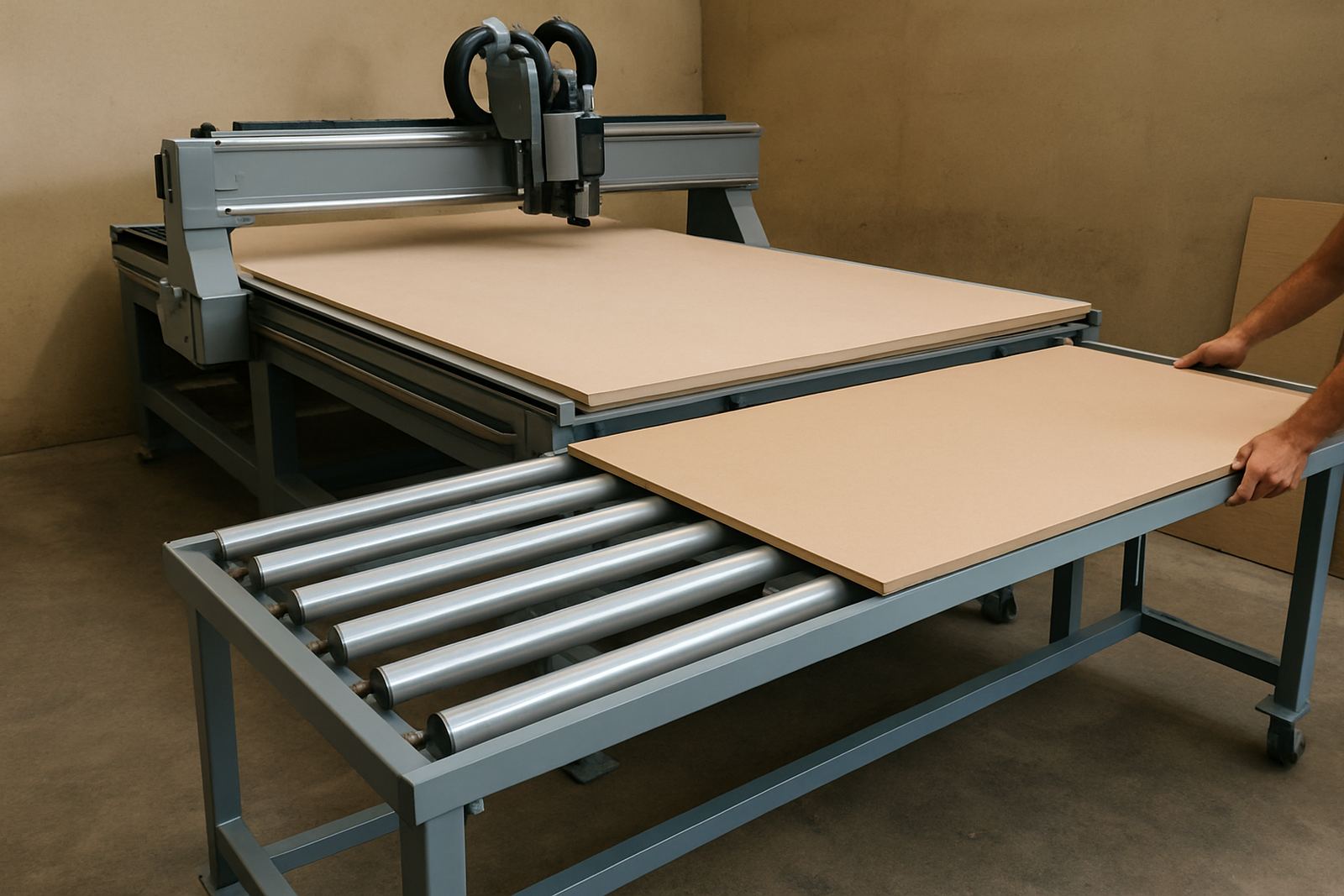
What a loading assist table does in a busy workshop
A loading assist table supports large sheet material at machine height so the operator can move boards with less lifting and less edge damage. In day-to-day use, that means fewer back strains, less chipping at the corners, and a smoother handover from stacking to cutting. It is especially useful when the team is working with MDF, chipboard, ply, acrylic sheets, PVC board and similar flat stock.
On sites where board deliveries arrive in bundles and the cutting room is close to a saw area, a loading assist table helps keep the flow controlled. The sheet can be slid, rolled or lifted in stages instead of being forced across a floor or dragged over a frame. That matters in Johannesburg workshops where space is tight, and it matters at coastal sites too where humidity can make heavy boards feel harder to handle.
- Reduces manual lifting effort during sheet loading
- Helps protect board edges and surface finish
- Supports cleaner, safer handling in smaller teams
- Works well where one operator often loads the machine
Typical sizes, travel and layout options
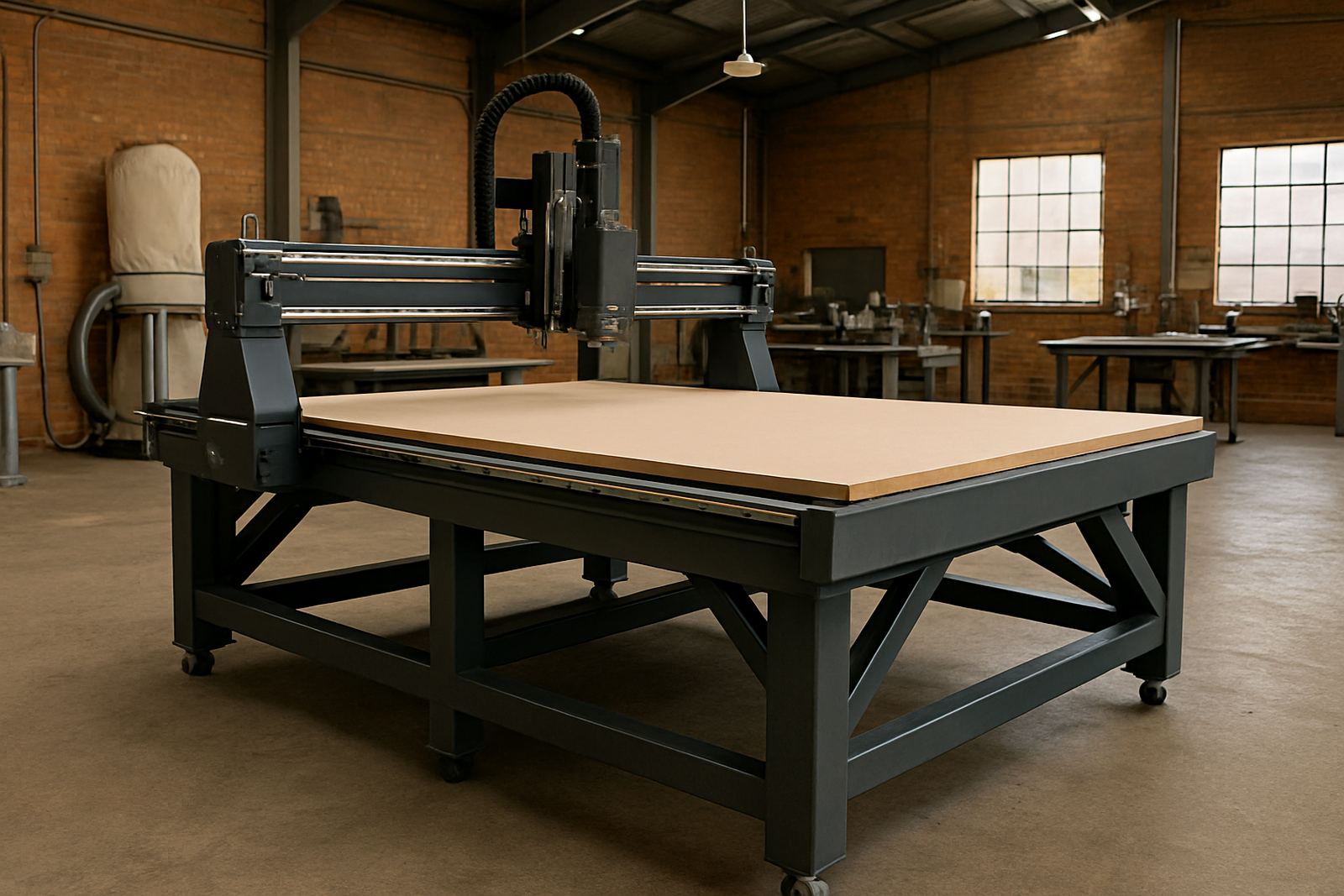
Loading assist tables are normally matched to the router bed size and the way sheets enter the machine area. For many South African shops, the aim is to support standard board formats with enough overhang and clearance to keep loading simple. The exact layout depends on the machine length, the direction of feed, and whether you want front loading, side loading or a guided transfer from a stack point.
Options may include fixed supports, roller sections, lift-assisted platforms or a table arrangement that sits flush with the main bed. Where the workshop handles heavier boards or repetitive nesting runs, a wider infeed area can save time. If the room is compact, the table can be planned so it does not block the operator path or dust extraction line. We also look at the floor level, because an uneven slab can make sheet transfer awkward.
- Matched to machine bed width and sheet size
- Can be arranged for front or side loading
- Suitable for single sheet handling or batch work
- Can be planned around tight workshop clearances
Where it suits best, from sign shops to furniture lines
This table suits any workshop that handles large flat panels and wants to keep the CNC side moving without too much manual handling. Sign shops use it for plastic sheet, foam board and composite material. Furniture makers use it for cabinet parts, shelving, and panel nesting. Joinery teams like it when repeat jobs come through during the week and the cutting room must keep pace with assembly and edging.
It is also helpful on sites where several operators share one machine. A loading assist table gives the team a clear loading point, which reduces confusion during busy shifts. In production areas with dust extraction and offcut removal, it helps keep the board path predictable. That is useful when the shop runs during load-shedding windows or uses a generator, because the team can restart work with less wasted time.
- Furniture panel cutting and nesting
- Sign making with sheet plastics and board
- Joinery shops with repeat production runs
- Small to medium factories needing safer loading
Installation, power and site checks before fitting
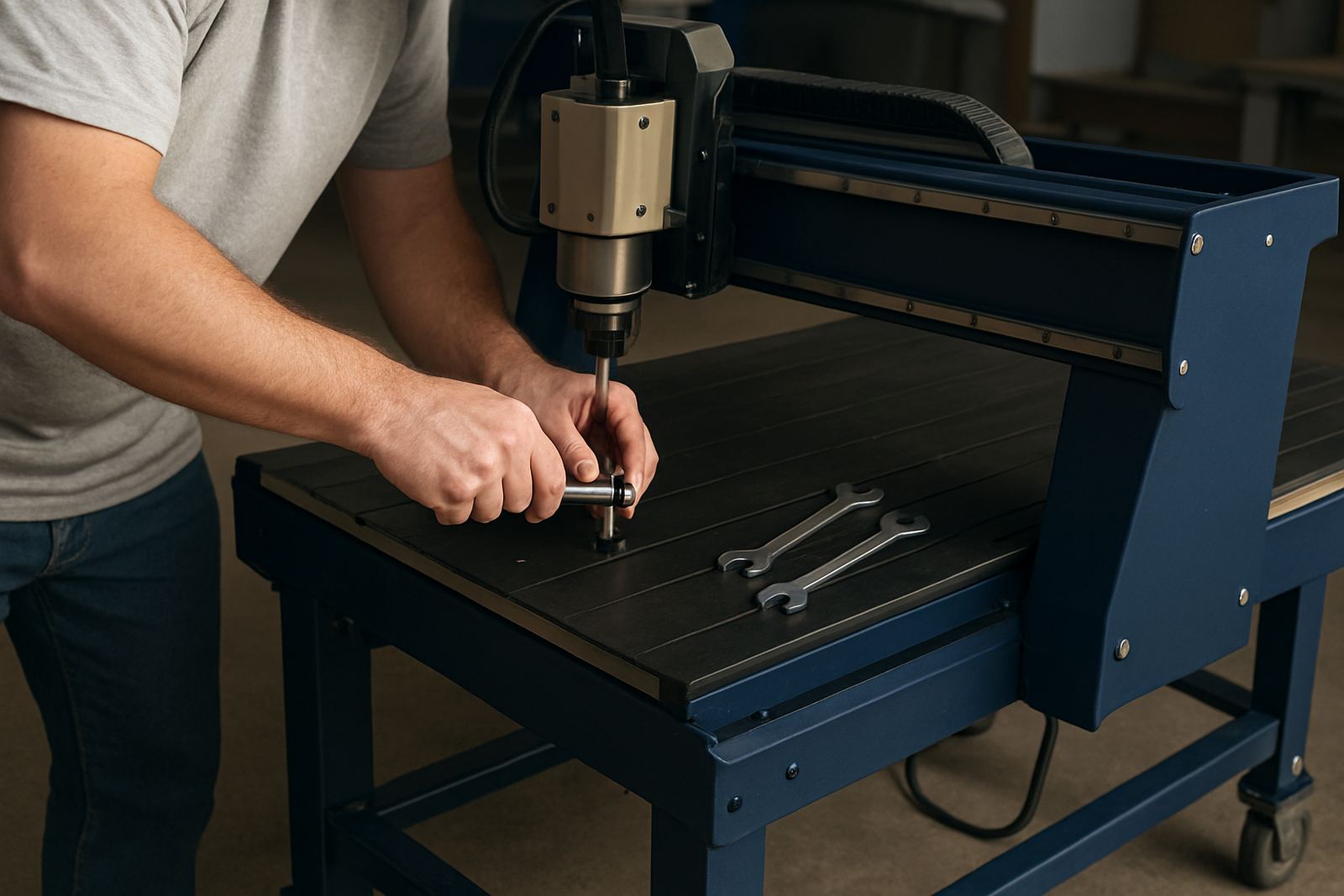
Before installation, the floor space, machine position and sheet path should be checked carefully. The table must line up with the router bed so boards move across without catching. If the workshop uses forklifts, pallet jacks or trolleys, the loading point should be set so those tools can reach the stock stack without blocking the operator. Good planning saves time later and avoids damage to rails, hoses and guards.
Most loading assist tables are mechanical and may not need a heavy power supply, but any lift, roller drive or powered transfer section should be checked against the site electrical supply. In South Africa, it is wise to confirm available voltage, phase and protection before delivery. Where the shop has unstable supply, the installation should also consider safe restart after a power cut. No gas supply is normally required. If the table is part of a wider automation area, dust extraction and compressor lines should be reviewed at the same time.
- Check floor level and machine alignment before fitting
- Confirm electrical supply if the table has powered parts
- Allow clear access for stack, trolleys and offload paths
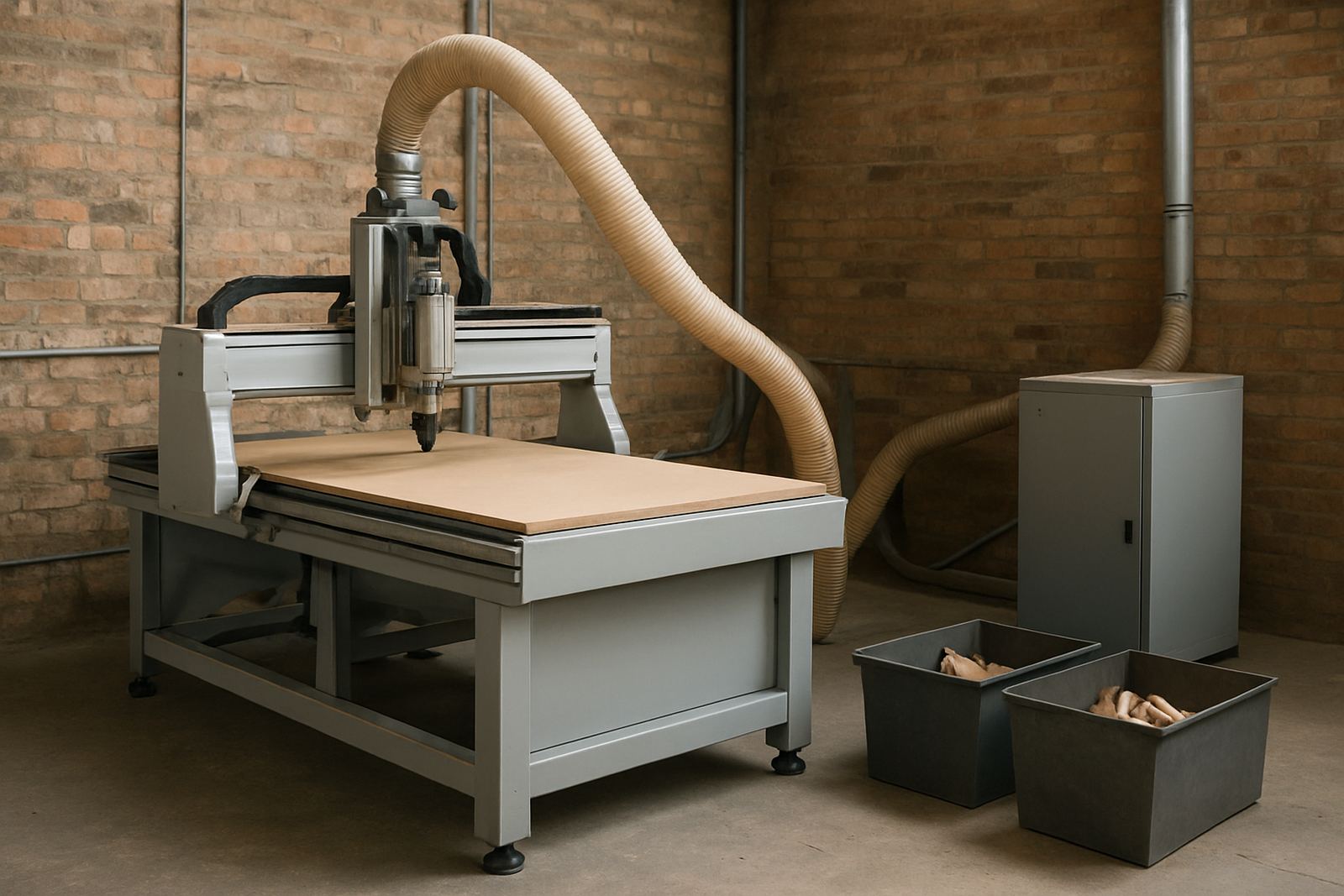
- Review dust line routing and operator space around the machine
Care, servicing and day to day checks
A loading assist table needs regular cleaning and basic attention so it stays easy to use. Dust, board offcuts and adhesive build-up can slow rollers or make sliding surfaces sticky. In humid coastal areas, steel parts should be checked for surface rust, while inland workshops should keep an eye on dust ingress and dry bearings. A weekly wipe-down and a monthly inspection usually catch most issues early.
If the table includes moving parts, the guide points and rollers should be checked for wear, noise and free movement. Any loose bolts, bent sections or damaged edge strips should be sorted before they become a handling problem. It also helps to keep the load area clear of small offcuts, because a tiny strip under a board can throw the sheet off line and lead to a bad cut. The service team can include the table in routine preventive maintenance, along with the router, spindle and vacuum system.
- Clean dust and offcuts from the loading area often
- Check rollers, slides and fasteners for wear
- Protect metal parts from rust in humid conditions
- Include the table in scheduled workshop maintenance
What to confirm before ordering your table
When ordering, the most useful details are the sheet sizes you actually use, the weight of the heaviest boards, the available floor space, and how the sheets enter the machine area. It also helps to note whether the team loads from a rack, from a forklift, or from a simple floor stack. With that information, the right table height and transfer method can be matched to the work pattern.
Ask for the table layout to suit your current router and any future upgrade plans. If you expect more output next year, it is worth planning for a wider infeed or a better transfer route now rather than changing later. We also recommend checking the operator height, visibility to the bed, and how the table will work with dust hoses and fences. A good fit keeps the loading side calm and predictable.
- Sheet sizes and maximum board weight
- Machine model, bed size and loading direction
- Floor space, aisle width and stock storage position
- Whether powered transfer or simple assist is preferred
Key facts
| Use | Assisted loading of flat sheet material onto CNC routers |
|---|---|
| Compatible material | MDF, chipboard, ply, plastics, foam board and similar panels |
| Common layout | Front load, side load or transfer from a stack point |
| Typical capacity | Specified to suit board weight, table width and workshop handling method |
| Power need | Usually none for basic assist tables, powered options depend on layout |
| Support | Installation, setup, operator training and scheduled servicing available |