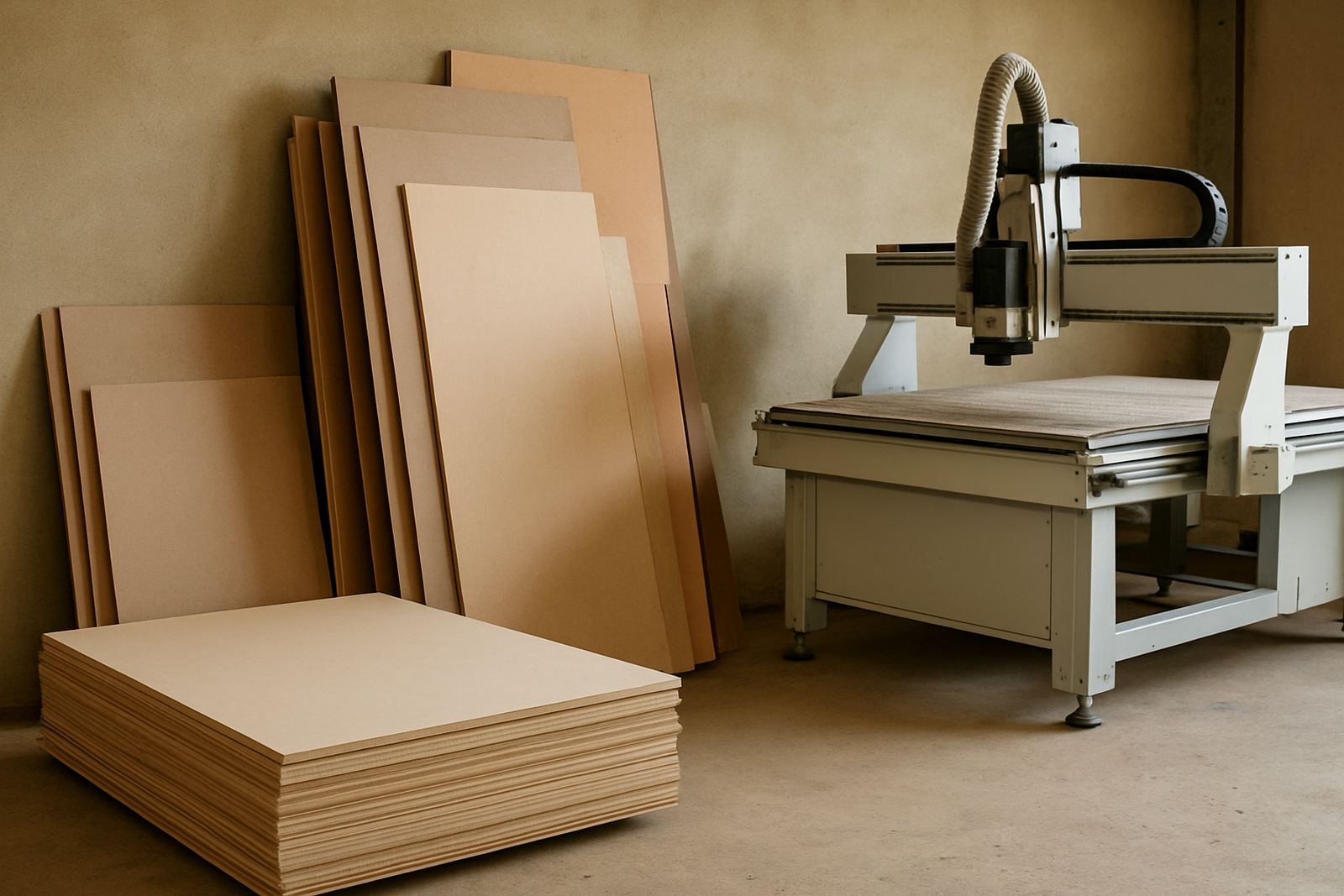
Why board condition matters before the first cut
When a board arrives at the router already bowed, twisted or swollen at the edges, the machine does not get a fair chance. The cutter follows the sheet, but the hold-down system still has to fight against movement, and that is where things start to go wrong. A vacuum table can only pull so much flat, and mechanical clamps can only hold what is still sound enough to grip.
In practical terms, storage problems show up as parts that nest poorly, tabs that break early, edges that chip and pockets that vary in depth. A sheet that looked fine against the wall may have picked up a curve from uneven stacking, or moisture on one face. Even a 2 mm bow can matter on a large panel when you are cutting cabinetry parts or sign blanks.
How South African storage conditions change sheet material
Johannesburg workshops often deal with dry air in winter and sudden rain in summer. On the coast, the air stays damp for longer and boards absorb moisture faster. If you store sheets on a cold floor, against a wall that sweats, or close to a roller shutter that opens all day, the panels can move differently from one side to the other.
That is why the same stack of boards can behave differently in Germiston, Durban North or Cape Town North. The issue is not only rain or humidity, but the daily change in temperature. Materials expand and contract, then settle unevenly if they are not supported properly. Small shifts add up, especially when the stack is heavy and the bottom sheets are carrying most of the load.
- Keep sheets off the floor on level bearers or a flat rack.
- Store by size and thickness so heavier boards do not crush lighter stock.
- Leave air space around the stack, but avoid direct draughts from doors or fans.
- Use the first sheets in and first sheets out rule so old stock does not sit too long.
Signs a board is no longer machine-ready
Most teams can spot obvious damage, but the difficult boards are the ones that almost look usable. The corners may be slightly swollen, the faces may not match in moisture, or the sheet may rock on a flat surface. If you need to force a board flat with too much weight, it may still move once the table starts cutting.
Before loading a sheet, check it against a known straight edge and look at the edges under light. If one corner is soft, chipped or raised, the vacuum seal can leak and the sheet may shift during a long run. On some jobs, the better choice is to trim the damaged edge first, then re-nest the parts. It takes a little longer but it avoids scrap later on the machine.
- Twisted boards can cause depth changes across the same part.
- Swollen edges reduce vacuum grip and can lift during profiling.
- Surface cups create chatter and uneven tool marks on wide panels.
- Stained or damp boards can leave dust clumps that interfere with hold-down.
What poor storage does to vacuum hold-down
Vacuum tables depend on contact area and a reasonably flat sheet. If the board is warped, air leaks under the centre or at the corners and the system works harder than it should. That means slower grip, weaker hold and more chance of the panel creeping when the cutter changes direction.
In a busy furniture shop, this can become a daily annoyance. Operators may keep turning up pump time, adding tape in the wrong places, or resetting parts that shift halfway through a cut. In some cases the real cause is not the machine at all, but the board stack that sat next to an open loading bay for two days. A clean board with a better face may run first time, while the damaged one wastes both time and sheet.
If your workshop also handles soft metals or plastics, poor storage can affect those materials too. A bowed plastic sheet may chatter on the table, and thin composite panels can drum or flutter if the seal is uneven. The more consistent the board, the less the machine needs to compensate.
Storage habits that protect cut quality and reduce scrap
Good storage does not need expensive fitout. It needs order, airflow and a rule that everyone follows. Keep long sheets supported on enough bearers so they do not sag. Do not lean fresh stock tightly against a wall where it can pick up damp from brickwork or condensation. If boards are delivered wet from transport or offloaded in rain, let them acclimatise before machining.
At a Germiston base serving Gauteng, a simple colour coded system can help the team separate dry stock, reserve stock and boards that need inspection first. That keeps a good sheet from being mixed with one that has already started to cup. It also helps during load-shedding, when workshops may close briefly and material sits longer than planned. A stack that sits undisturbed for a weekend in the wrong place can shift enough to affect Monday morning cuts.
- Mark the date of delivery on each pack or stack.
- Store cut-to-size offcuts flat, not on edge.
- Rotate stock so the oldest material is used first.
- Keep adhesive-backed materials sealed until needed.
A Germiston example: one damp stack, three failed nests
One furniture maker near Germiston had repeated problems with nesting accuracy on large melamine sheets. The router was serviced, the tooling was checked and the toolpaths were correct, but the sheets still lifted at one corner and the offcuts jammed under the cutter. The cause turned out to be a storage corner next to a roller door where rainwater blew in during afternoon storms.
Once the stack was moved onto a level rack, off the floor and away from the door, the difference was immediate. Vacuum grip improved, the corners stayed flatter and the operator could run longer parts with fewer stops. The business did not need to change its machine first, it just needed to protect the material before it reached the table. On this workshop floor, the saving started with board storage before any machine changes were made.
When to inspect stock and when to call for setup help
If warped or damaged boards are happening often, the answer may be a mix of storage discipline and machine setup. Vacuum leak checks, table zoning, dust extraction balance and operator training all matter when sheets are inconsistent. A good setup can tolerate some variation, but it should never be expected to rescue poor stock every day.
Teams should inspect incoming board packs, check their storage position and look at how the material is loaded onto the table. If the same faults keep returning, it may be time to review the full workflow from receiving to cut. That includes machine commissioning after relocation, backup of controller settings, and practical tooling notes so operators know what material is acceptable and what should be set aside. Small controls at the start save a lot of rework later on.