Why sheet loading deserves its own routine
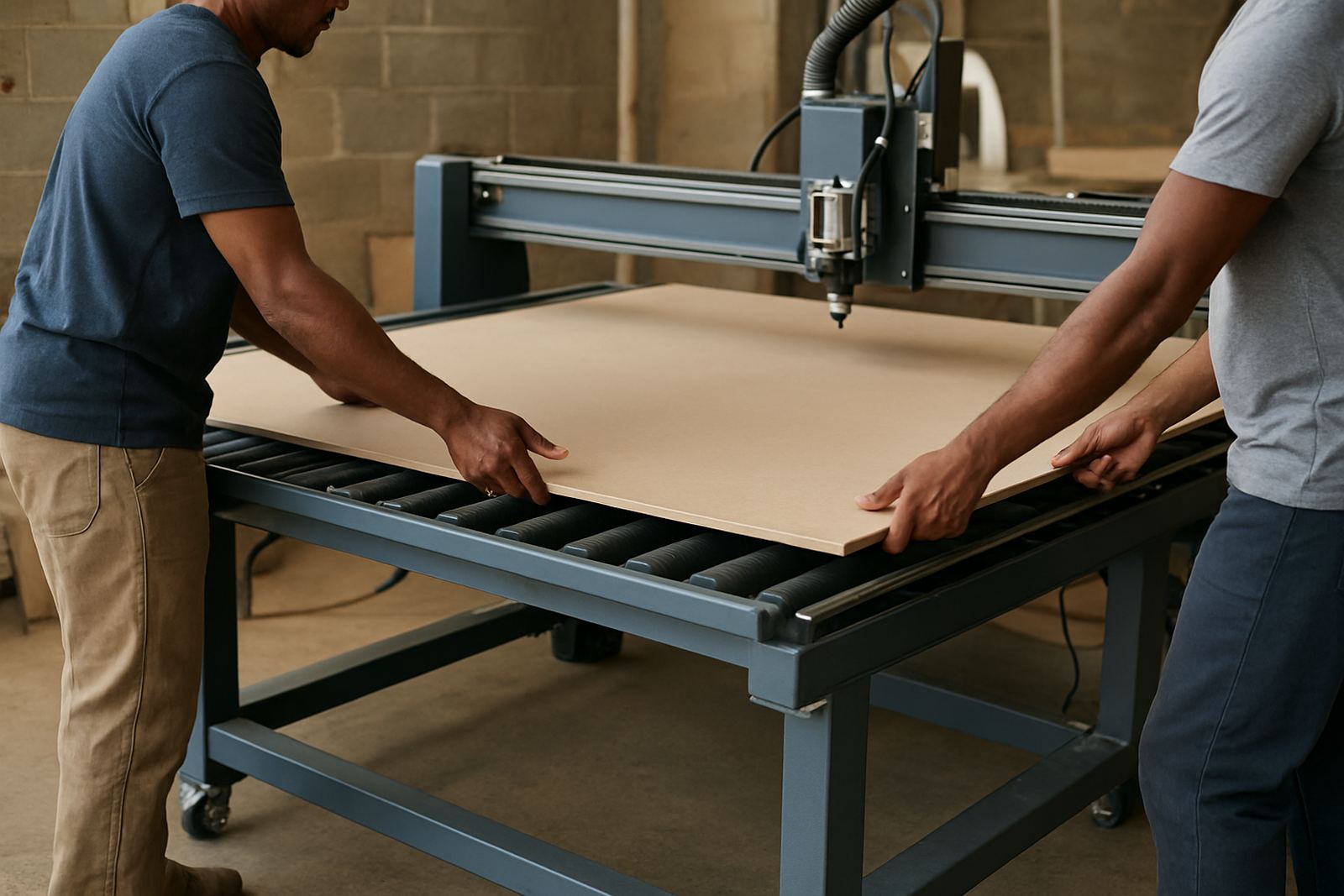
Most fabricators focus on the cut, the toolpath and the finish, but the handover onto the table often decides whether the job starts cleanly. Large boards carry weight, flex, and sharp edges, and when they move between a rack, a roller stand and the machine bed there is very little margin for error. A sheet that lands skew or catches on a clamp can throw off the first cut and waste good material.
A proper loading routine also protects the crew. In workshops around Germiston and Johannesburg East, teams are often handling MDF, plywood, acrylic and composite sheets in tight spaces with forklifts, trolleys and offcut stacks nearby. The safest shops do not leave loading to chance, they build a repeatable process that new staff can follow without guesswork.
Plan the path before the sheet leaves the rack
Before any board moves, check the route from storage to machine. Clear offcuts, loose tooling, straps and cords from the floor. Make sure rollers are set to the correct height and that the machine bed is ready, with clamps, vacuum zones or spoilboard supports in place. If the operator has to step around a pallet jack or squeeze past another board, the route is too tight.
Good planning also means matching the sheet to the handling method. A full 2440 x 1220 mm board is not the same as a small remnant, and some materials need two people while others need a lifting aid. On coastal jobs in Durban North, moisture can make boards swell and grip unevenly, so the path and support points matter even more. A quick check takes two minutes. It can save a full sheet and a lot of swearing.
- Mark the loading route on the floor if the workshop is busy.
- Keep the path dry, especially after cleaning or rain.
- Confirm the destination bed is clear and ready.
- Assign one person to call the move, so nobody guesses.
Use the right handling method for the material
Not every sheet should be carried the same way. Soft wood panels can flex and chip at the corners, while acrylic and other plastics can crack if they are twisted during lifting. Soft metals need care too, because sharp burrs and panel edges can cut hands quickly. The best method depends on sheet size, finish quality and the number of people available.
Where possible, use vacuum lifters, sheet trolleys or lift tables to reduce manual handling. Even in smaller shops, a simple roller system can take strain off the crew and keep the board flatter as it moves. For heavier production work, especially where operators are loading all day, a proper lift aid is not a luxury, it is basic workshop sense.
- Wear gloves with grip, but make sure they still allow finger feel.
- Use closed shoes with good soles, never sandals or open footwear.
- Do not stand directly in the drop zone when the sheet is being set down.
- Keep fingers clear of pinch points at the edge of the bed and rollers.
Get the board square before the first cut
A sheet that is slightly crooked on the bed can create problems across the entire nesting run. The first part may still cut, but later parts can drift into the waste area or leave thin tabs where there should be full support. For nested jobs, alignment is not cosmetic, it is part of the cutting accuracy.
Operators should check that the front edge is seated properly against the stops or reference points used on the machine. If the workshop relies on vacuum hold-down, the sheet must sit flat enough to seal across the zone. If it bridges over dust, offcuts or a damaged spoilboard area, the vacuum can lose pull right where the cut needs support. A quick wipe and a short check can prevent a long rework.
In Germiston, where workshops often run early starts and shared loading bays, poor alignment usually comes down to rushing. The fix is not a clever trick, just a steady routine and a clear responsibility for who signs off the load before cycle start.
Work safely around load-shedding and power changes
South African workshops know how quickly a loading job can be interrupted by load-shedding or a local supply dip. If the power fails while a sheet is half on the bed, the team needs a safe pause point. That means keeping hands out of the machine area until the controls, vacuum and drives are fully settled again. Never force a board into place while the system is coming back online.
It also helps to have controller backups, a clear restart checklist and a standard rule for what happens if a sheet is left on rollers during a cut delay. The goal is to avoid panic moves. Staff should know whether to remove the sheet, secure it in place, or wait for the technician or supervisor to confirm the next step. Small discipline here protects the machine and the operator.
- Keep the stop button accessible from the loading side.
- Do not reach into a dark machine area after a power cut.
- Store restart notes near the control panel, not in a drawer.
- Test recovery steps after maintenance, not during a live job.
Dust, humidity and floor conditions change the risk
Sheet loading safety is not just about lifting. Dust build-up can hide offcuts, make floors slippery, and stop boards from sitting flat on the bed. In humid areas like Durban North, panels may absorb moisture and become heavier or harder to slide. In dry inland workshops, static can make plastic sheets cling or shift suddenly when they release.
Regular cleaning around the machine entrance, the rack and the roller area keeps the loading zone predictable. A dust system that is poorly balanced can leave fine waste on the bed, which then becomes a slip point for the next board. When the table is clear and the floor is clean, the operator can focus on placement instead of reacting to surprises.
Train the team to load the same way every time
Safe loading is a habit, not a once-off briefing. New staff should be shown where to stand, how to call a lift, where the pinch points are and what to do when a sheet catches. Senior operators should follow the same routine every shift so that the junior team copies the right method. If one person swings a board over the bed while another waits for a clear signal, confusion follows very quickly.
A practical training session should include real sheets, real routes and the actual machine bed in use. That is how teams learn where a board flexes, where it scrapes, and how much space they really need. For Johannesburg and Pretoria workshops that run mixed shifts, this makes handovers much safer because everyone uses the same language and the same sequence.
MultiCAM supports these routines with installation, commissioning, operator training, tooling setup and machine relocation across South Africa. If your loading area needs a better process, a cleaner support layout or a safer way to move board stock, start there before the next production run.