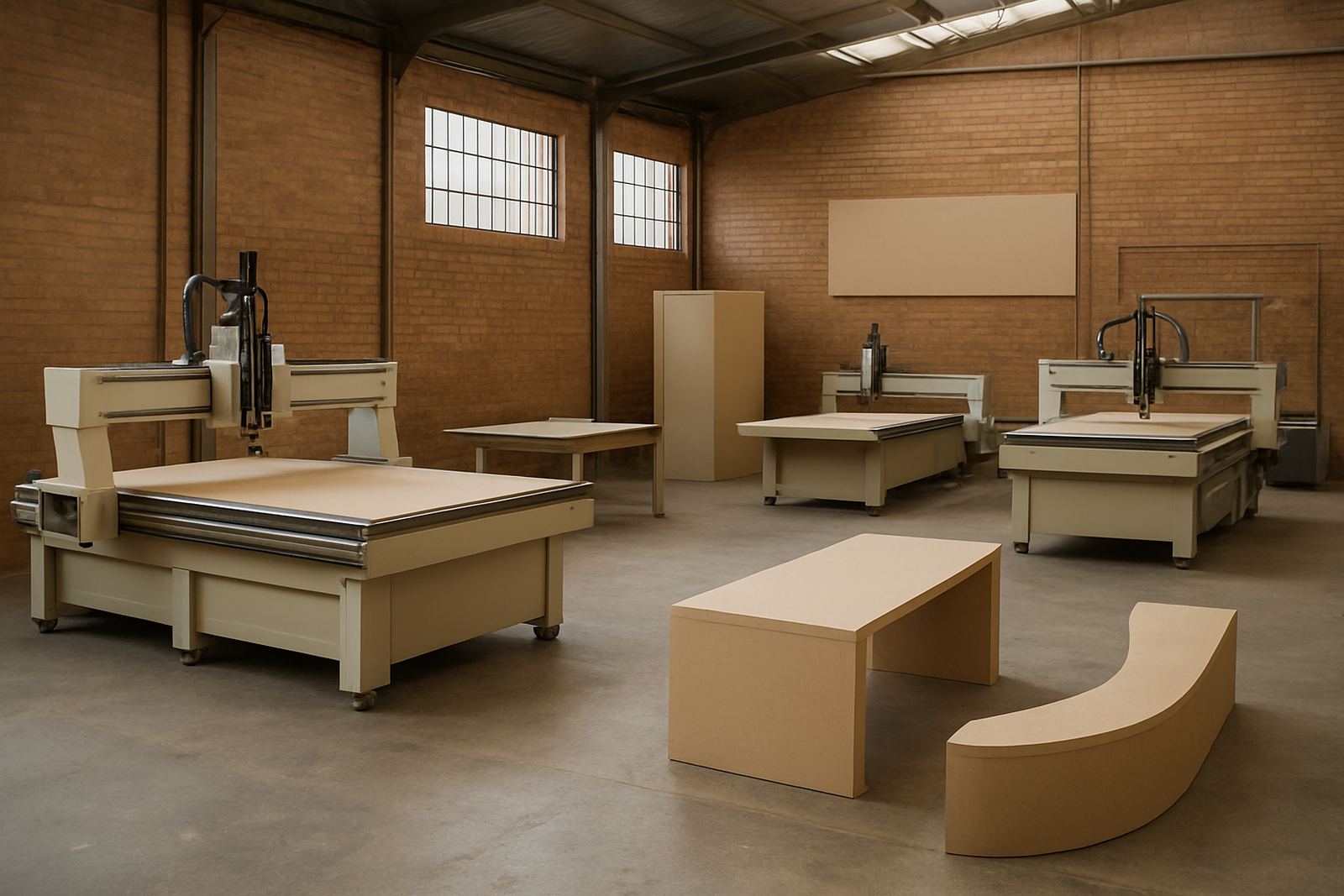
CNC routing for repeat exhibition builds
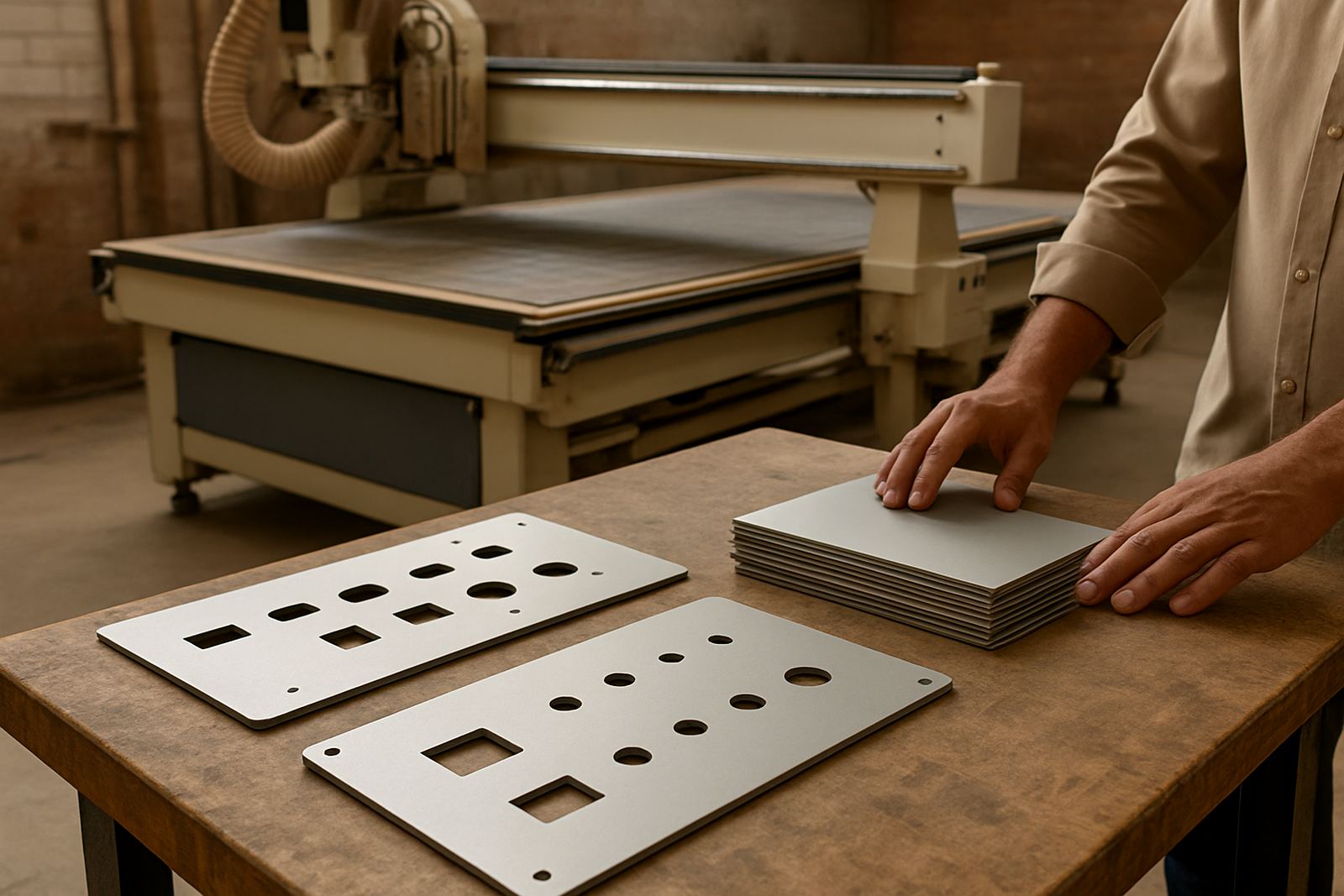
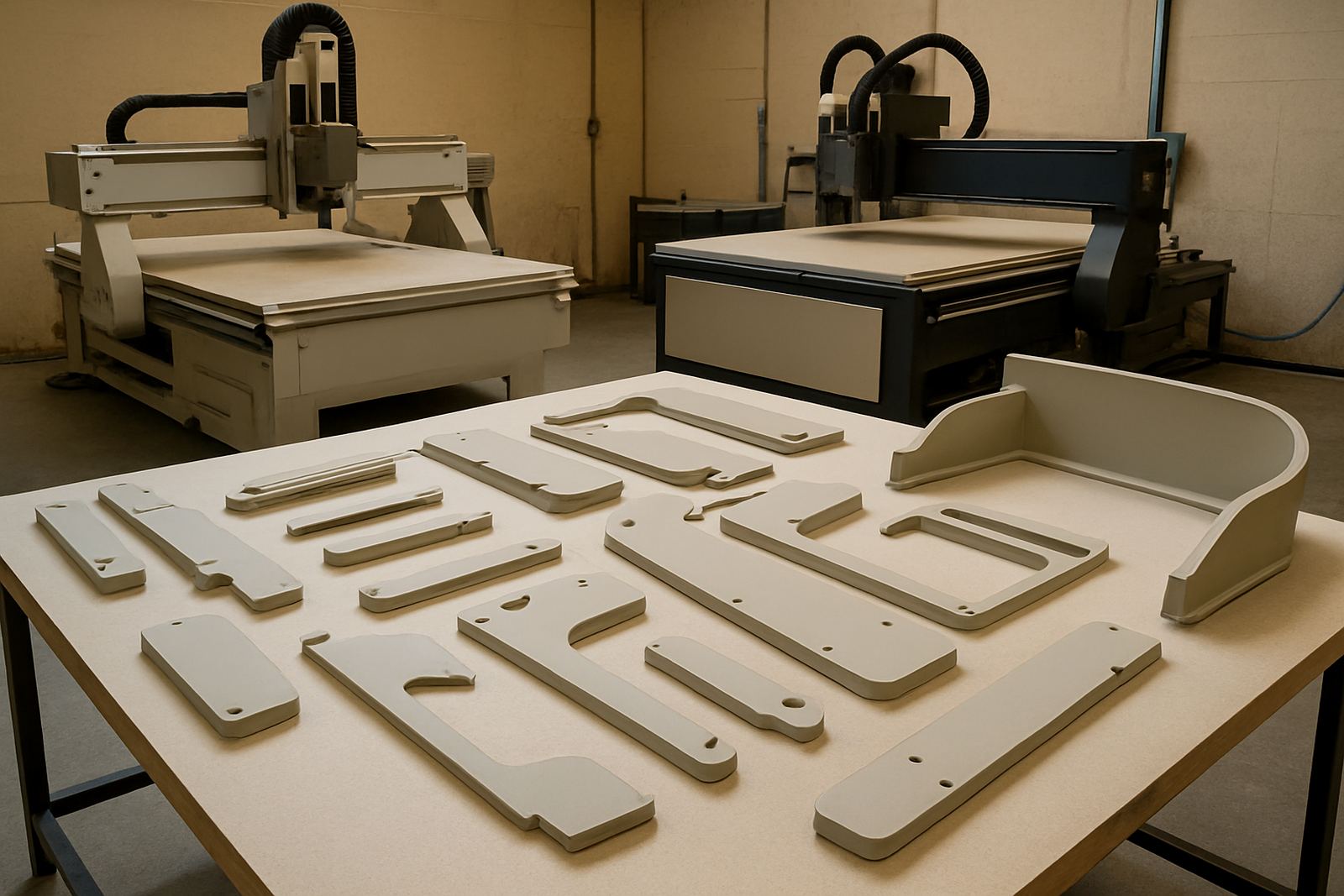
Exhibition work is a mix of one-off creative ideas and repeated parts that must land on site with no fuss. A CNC router helps your team cut side panels, plinths, shelf supports, fascia boards and curved feature elements to the same size every time, which saves rework when a stand is built in sections.
For Johannesburg and Gauteng teams, this matters because jobs often move from concept to truck loading within a short window. If your measuring, cutting and finishing happen on different days, small errors add up. CNC routing gives you a consistent cut path for MDF, plywood, acrylic sheet, PVC foam board and some soft aluminium detail work, so the stand components match the drawing instead of relying on hand trimming at the venue.
It also helps with brand consistency. Graphic openings, lightbox frames, hidden service panels and curved arch pieces can all be nested from the same file set. That means if you repeat a stand at Gallagher, Nasrec, Sandton or at a coastal venue, the parts are not being guessed at again.
- Repeatable modular parts for walls, counters and display plinths
- Curved feature panels and lettering cut from sheet stock
- Cleaner nesting to reduce offcuts and material waste
- Fewer site fixes when installation time is tight
Typical machine set for a stand-making workshop
Most exhibition workshops do not need a huge production line to get started. A practical entry setup is often a 3 axis CNC router with a vacuum table, a suitable dust extraction connection and tooling matched to board materials. If you regularly cut thicker sheet or want faster throughput, a larger bed and stronger vacuum hold-down become more useful.
For stand builders working in wood-based boards and plastics, MultiCAM usually looks at table size, spindle power, nesting needs and the kind of detail you want to hold. A smaller workshop may run a machine for component cutting and routing of letters, while a busier shop may need a second table or a better material flow around loading and offloading. In humid areas like Durban or Cape Town North, sheet storage and humidity control matter too because warped board causes bad nesting, so the machine is only one part of the answer.
- 3 axis router for sheet cutting and profile work
- Vacuum table for faster sheet loading and accurate hold-down
- Basic dust extraction and table sealing checks
- Tool set for trimming, pockets, v-grooves and edge finishing
Where a workshop also handles light aluminium trims or bracket work, we look carefully at spindle choice, tool life and feed rates. You want enough machine rigidity for repeatable work, but not overspending on capacity you will never use.
Layout planning that keeps stand jobs moving
Good routing starts before the machine is switched on. For exhibition work, the workflow should let a board move from storage to cutting, then to edge finishing and assembly without crossing back and forth over the shop floor. A straight material path cuts lost time and lowers the chance of damaged panels, especially when a supplier delivers late and the team is already under pressure.
The operator should have clear access to the controller, the vacuum valves and the tooling rack. Keep the loading area large enough for full sheets, and leave space for offcuts that will be reused on small components. If you are planning a Germiston base or a branch workshop in Midrand, Pretoria East or Johannesburg East, check your power supply and extraction routing early. Load-shedding backups, proper earthing and sensible cable runs make a real difference when a build has to continue after an outage.
- Store flat sheet stock in a dry, level area
- Separate clean cutting from sanding and assembly
- Keep tool changes and calibration notes close to the operator
- Allow room for finished parts to dry and be packed safely
We also advise stand builders to think about delivery size before cutting starts. A beautifully cut panel can still become a problem if it will not fit through a venue doorway or into the lift. Planning the machine output around transport limits saves expensive surprises.
Common mistakes that slow down exhibition jobs
The first mistake is underestimating the material. Stand builders sometimes treat MDF, PVC and acrylic as if every sheet behaves the same, but thickness variation and moisture content can change the final fit. A second problem is weak nesting practice. If the drawing is arranged badly, you lose board area and increase cutting time. That is money straight off the job.
Another issue is tooling choice. A blunt cutter burns board edges, chips laminated surfaces and leaves extra finishing work. If your team is cutting mixed materials, the tooling plan needs to be written down and kept simple enough for shift staff to follow. A small typo in the setup notes or one missing zero in a depth setting can wreck a whole sheet, so the operator training matters as much as the machine itself.
Dust system balancing is often ignored too. If extraction is poor, fine dust builds up around the bed and can interfere with hold-down. In some workshops the problem is not the machine, it is the ducting layout or a blocked filter. MultiCAM supports this with practical maintenance advice, vacuum leak checks and controller backups so the machine stays predictable.
- Do not cut warped boards without checking flatness first
- Do not leave tooling changes to memory only
- Do not ignore dust extraction or vacuum loss
- Do not plan the full job on a file that was never test cut
Budget ranges for exhibition stand routing in Rand
Budgets depend on how many stands you build, the sheet sizes you handle and how much finishing happens in house. For a smaller workshop entering CNC routing for stand work, a practical starting range can be around R350 000 to R750 000 for a router, basic extraction interface, tooling and setup support. That covers a serious entry point without forcing you into a large production cell too early.
For busier shops that want better speed, larger tables and stronger production control, budgets often move into the R850 000 to R1,800,000 range. If you need material handling, more advanced vacuum arrangements or a second machine for throughput, then the investment can go higher. The right choice depends on how many event builds you do each month and whether you are cutting mainly flat panel work or more detailed feature structures.
Costs also continue after installation. Tooling replacement, spindle servicing, preventive maintenance, operator training and dust system balancing all need to be allowed for. A machine that is cheaper on day one can become expensive if it is slow to set up or hard to keep running during busy exhibition seasons.
How MultiCAM supports stand builders across South Africa
From the Germiston base, MultiCAM works with stand makers across South Africa, including Johannesburg East, Midrand Service, Pretoria East, Durban North, Cape Town North and nearby areas. That local support matters when a machine needs commissioning before a trade show season, or when a workshop is moving premises and cannot afford a long stop.
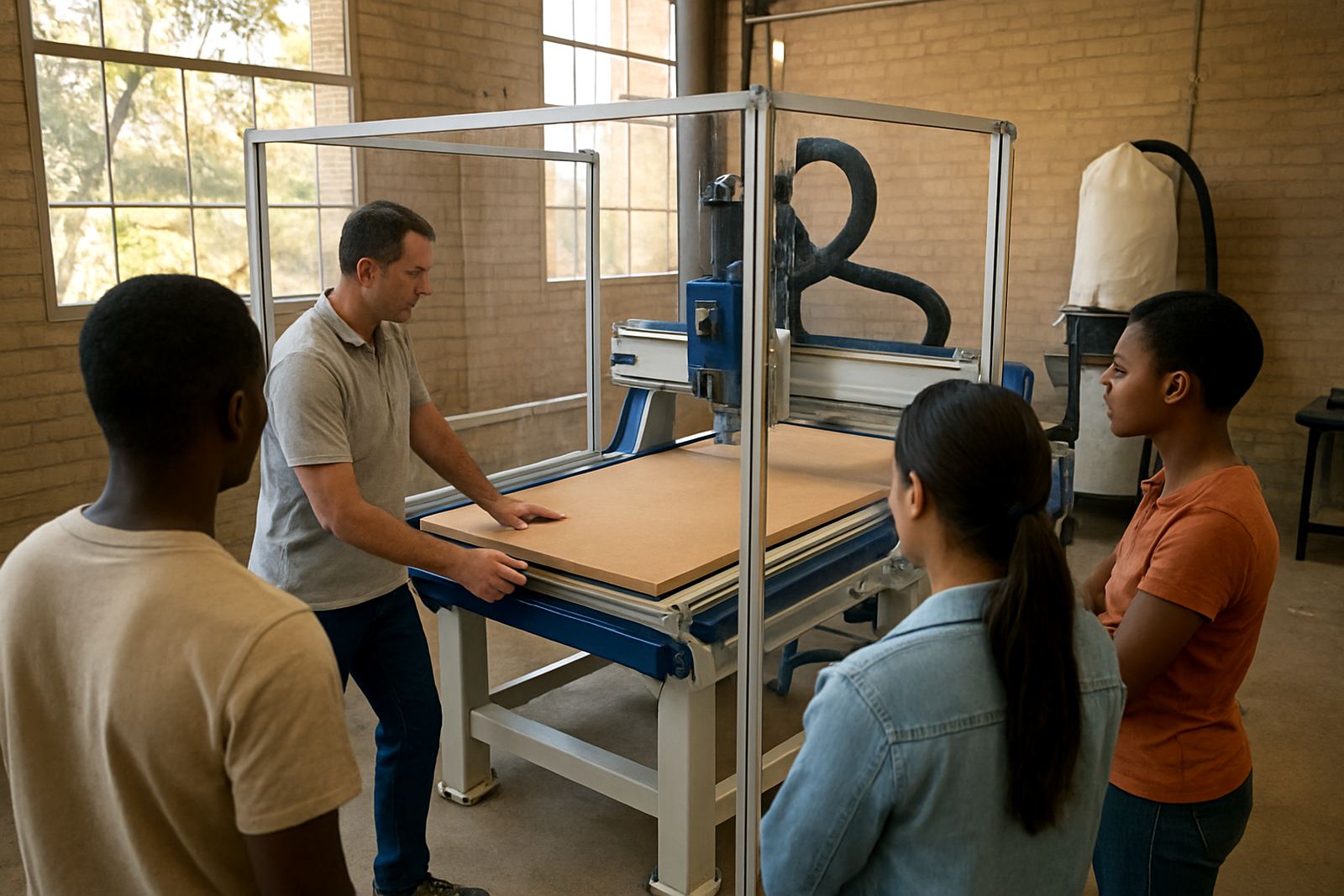
The team helps with machine installation, machine relocation, operator training, tool setup, controller backups, spindle service, preventive maintenance and vacuum leak checks. For exhibition work, the useful part is not just the machine itself but the calm advice around how to run it day after day when deadlines are tight and the board stack is waiting.
If your business makes modular stands, reception elements, curved panels or branded feature walls, MultiCAM can help you choose a machine that suits the work you actually take on, not the work you hope will appear someday. Send a message through our contact form to discuss a setup that matches your sheet sizes, power supply and workshop space.