Start with the machine, not the truck
Before anything is loaded, the relocation plan should begin with the machine itself. Check the model, table size, spindle weight, vacuum setup, control cabinet position and whether the machine was installed on anchor bolts or levelling feet. A router that cuts plywood all day in Germiston will need a different move plan from a smaller unit in a signage shop in Pretoria East, especially if it has dust extraction, a vacuum pump and tool racks attached.
We always advise clients to treat relocation as a sequence of decisions. What must be removed first, what can travel with the machine, and what must be disconnected and tagged for easy reassembly? If you do that well, the machine arrives with fewer surprises and the recommissioning time drops.
- Record the machine dimensions, weight and centre of gravity.
- Photograph cable runs, air lines, limit switches and vacuum hoses.
- Label every disconnected item before removal.
- Back up the controller and current job settings before shutdown.
Time the move around production and power
Relocation planning should always fit the production calendar. If the workshop is busy with cabinet work, sign panels or short-turnaround parts, then moving day must be locked in before the last rush starts. In Gauteng and the coastal cities, many workshops also have to plan around load-shedding, municipal access times and building rules that limit after-hours lifting.
It helps to choose a quiet window that allows for testing after re-installation. That way the team can confirm axis movement, spindle cooling, vacuum hold and tool changes without the pressure of a delivery waiting at the gate. A rushed move often saves one day and costs three later.
For sites in places like Midrand or Durban North, road access matters too. Tight driveways, low gates and shared loading bays can delay a lift if they are not checked in advance.
Strip only what needs stripping
Not every part of a router should travel in one piece. The correct strip-down depends on the machine frame, the route out of the building and the lifting equipment available. Some tables are best moved as a full unit, while others need the gantry, control cabinet, spindle or vacuum pump removed to keep the load safe and within transport limits.
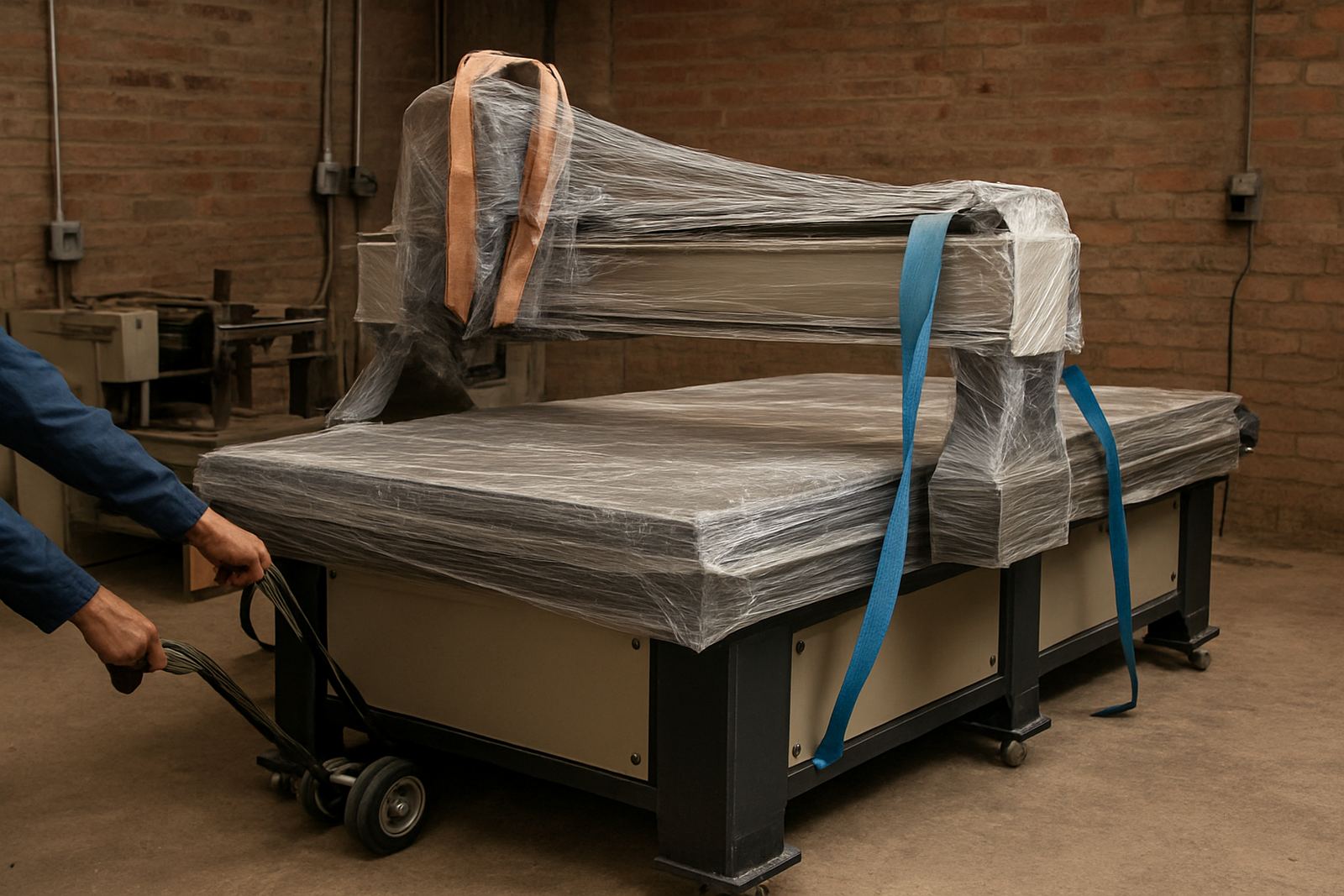
The aim is simple: reduce risk without creating extra labour on site. Cables should be coiled properly, fittings bagged and marked, and sensitive parts wrapped against dust and vibration. South African workshops often deal with concrete dust, humidity and uneven floors, so clean packing matters more than many people expect.
- Remove loose tooling, clamps and consumables.
- Drain or secure any air or vacuum components.
- Protect rails, bearings and cable chains from impact.
- Keep fasteners grouped by machine section.
Choose transport that suits the machine and the route
Transport planning is where many relocations go wrong. A router needs more than a flatbed and a strap or two. The mover must understand where the load will sit, how it will be restrained, and how it will come off at the destination. For machines with sensitive gantries or wide tables, a forklift or crane may be the safer option, especially if there are steps, ramps or soft ground.
In Johannesburg East, for example, some industrial parks have narrow access roads and time-controlled deliveries. That means the transport team must know the route, the gate height and the unloading space before the machine leaves the old site. If the new workshop is in a busy mixed-use area, book offloading space early and make sure the floor can take the load.
Humidity is another factor on the coast. Metal parts can pick up surface moisture during transit if they are left open overnight, so the machine should be covered and sealed correctly.
Reinstall, level and back up the data
Once the machine is in place, the real work starts. Reinstallation is not complete until the machine is levelled, aligned and checked against its original settings. Any small shift in frame position, cable tension or vacuum sealing can affect cut quality, edge finish and repeatability. If the unit has been moved from Germiston to Cape Town North, for example, the team should expect to spend time on alignment and controller checks before production restarts.
The controller backup is critical. It should include machine parameters, tool libraries, home positions and any customer-specific setup notes. If those are missing, the workshop may lose time re-entering values and chasing faults that were created during the move, not by the machine itself.
- Level the machine frame before power-up.
- Check axis travel for obstruction or binding.
- Restore the controller backup and confirm all parameters.
- Test vacuum zones, limit switches and emergency stops.
Commission before you hand the job back to the shop
A relocated router should never go straight back into full production without commissioning checks. This is the stage where spindle run-out, tool clamping, homing accuracy, vacuum leak points and dust extraction flow are all tested. If the machine has been sitting idle for a week or travelled far, it may also need a close inspection of belts, linear guides and cable carriers.
Operator training is part of the handover too. The team that runs the machine every day should know what changed during the move, what signs to watch for, and who to call if a fault appears. That includes the practical bits, such as how long to warm up the spindle, what vacuum level to expect, and which alarms mean the machine should be stopped immediately.
A proper recommissioning check gives the workshop confidence to cut again with fewer trial runs and less scrap.