
Start Every Shift With a 10 Minute Dust Check
In a busy South African workshop, the first enemy is not the machine itself but the fine dust that settles overnight. Before the first job starts, walk around the router and look at the table, rails, cable tracks and extraction hoods. If material was cut late the day before, there is often a layer of powder around the gantry and spoilboard that can move into places it should not.
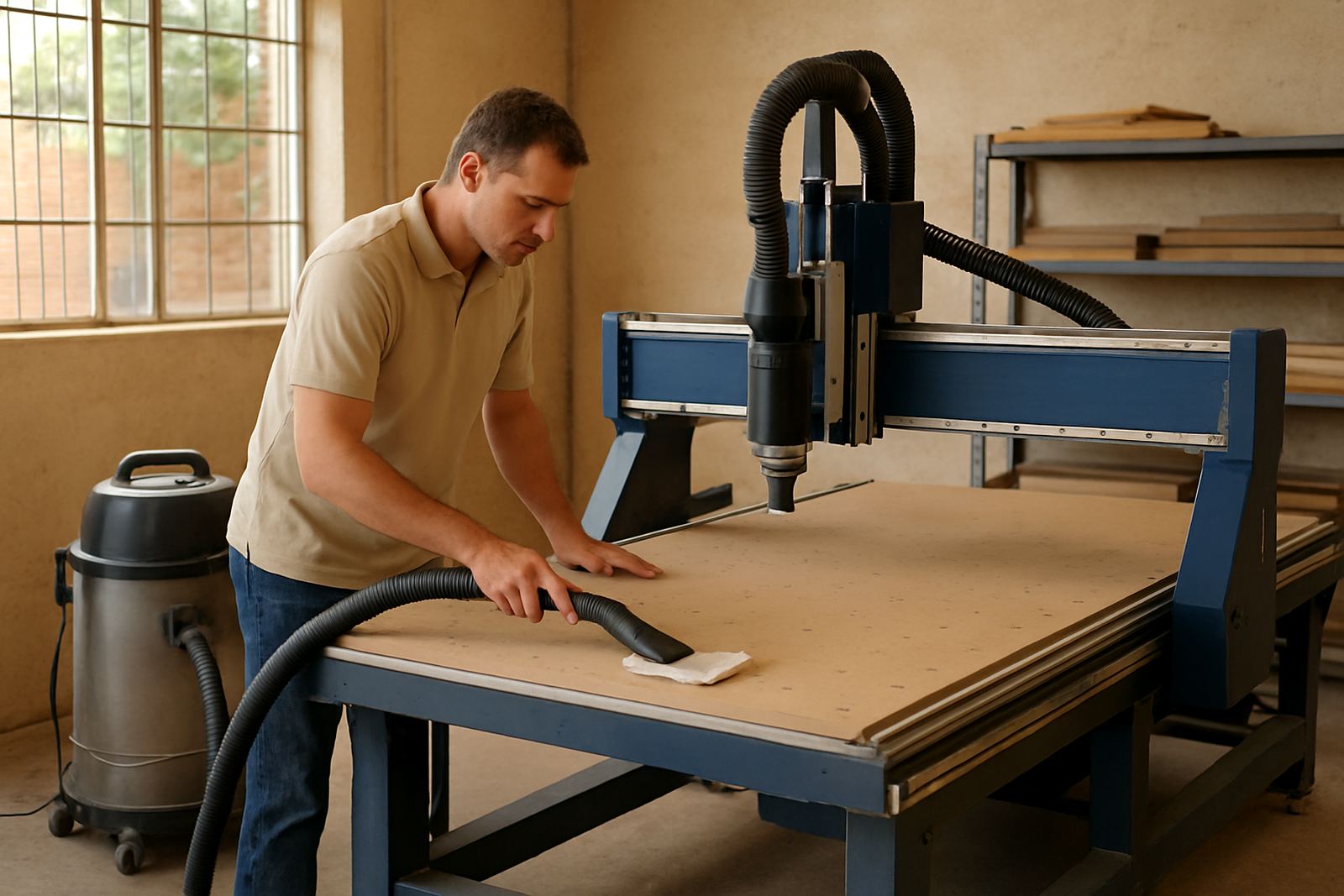
Use a soft brush, a vacuum with a fine nozzle and a clean, dry cloth. Do not blow chips deeper into bearings or limit switches with compressed air unless the machine maker specifically allows it. That habit can push grit into the wrong spots and cause more work later.
- Vacuum the table and T-slots before loading material
- Wipe dust from rail covers and exposed linear areas
- Check that extraction hoses are seated properly
- Look for loose offcuts near the tool path
Keep Rails and Carriages Free of Sticky Build Up
Rails carry the accuracy of the machine, so they need special attention. If a workshop cuts MDF, chipboard or foamed PVC every day, the dust can mix with a small amount of oil or humidity and form a paste. That is common in places like Germiston and Johannesburg East, and it gets worse when the weather changes from dry winter air to damp summer mornings.
Clean the visible rail surface with a lint free cloth and a light cleaner approved for the machine. If the machine uses wipers on the carriages, check that they are still sealing properly and not full of compacted grit. A quick wipe is enough most days, but once a week give the rails a more careful inspection for scoring, rust spots or uneven wear.
If the router sits near an open roller door, make sure the team closes up when wind picks up. Fine grit from outside can travel farther than people think, and one dirty rail can show up as chatter on an otherwise good job.
Sensors, Limits and Cable Tracks Need Clear Sight
Modern routers depend on sensors and switches to know where they are. If dust collects on a homing sensor or around a limit switch, the machine may slow down, stop unexpectedly or home inconsistently. That costs time and can put pressure on operators who are already trying to meet a delivery date.
Clean these points with care. Use a dry cloth first, then a manufacturer-approved cleaner if needed. Make sure no offcuts, tape backing or plastic trimmings are hanging near the cable track. A cable that rides incorrectly can wear through its outer layer faster than expected.
- Wipe sensor faces gently, never with a wet rag
- Check cable tracks for trapped chips and broken ties
- Inspect home positions for repeatable movement
- Confirm emergency stop buttons are clean and easy to reach
On older machines, staff often ignore small sensor delays until they become full stoppages. A two minute wipe at the end of the shift is cheaper than an unscheduled callout the next morning.
Extraction Points Must Stay Open, Not Half Blocked
A router can only keep the workshop clean if the extraction path is actually open. Dust hoods, hoses and filters collect fine material very quickly, especially on nesting jobs with long cutting runs. If extraction drops off, the table gets dirty faster, the spindle area heats up and the workshop air becomes harder to work in.
Check the extraction point closest to the cutter first. Remove chips around the brush skirt or hood opening and watch for torn bristles or cracked fittings. Then look at the hose route to see whether it has a sharp bend or a crushed section. Even a small restriction can reduce airflow more than people expect.
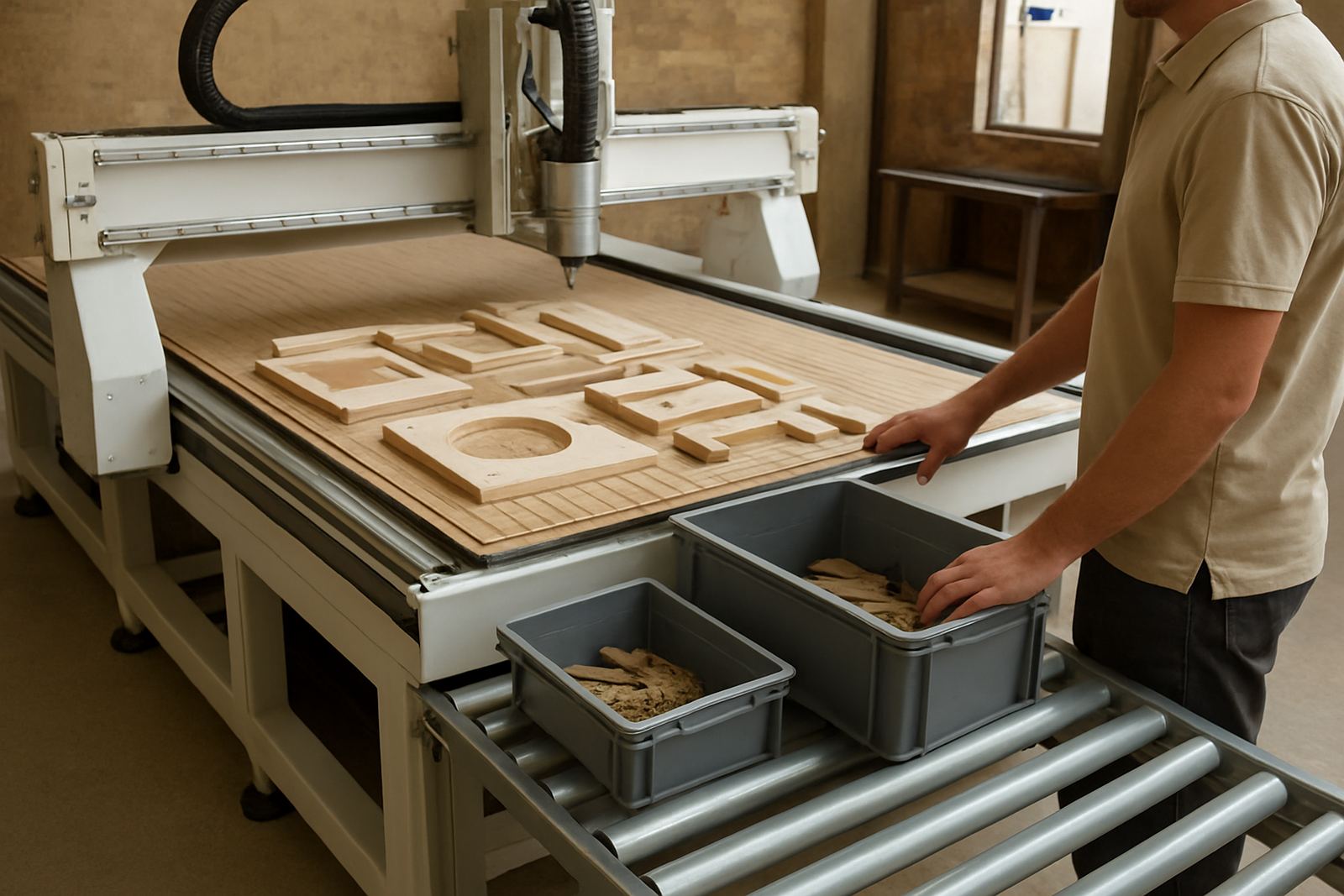
- Empty collection bins before they overfill
- Tap or clean filters as part of the daily close down
- Inspect hose joins for leaks and loose clamps
- Check for material offcuts stuck under the hood
If the router is linked to a dust system that serves other machines, balancing matters. When one branch is starved of airflow the router usually pays for it first, because that is where the fine particles are generated.
Clean Cuts Begin With a Clean Spoilboard and Table
The spoilboard is a working surface, not storage. Screws, adhesive tape, label scraps and tiny offcuts all interfere with vacuum hold down and can throw a sheet slightly out of position. That might only be a millimetre or two, but in joinery and sign work those small shifts can ruin a repeat order.
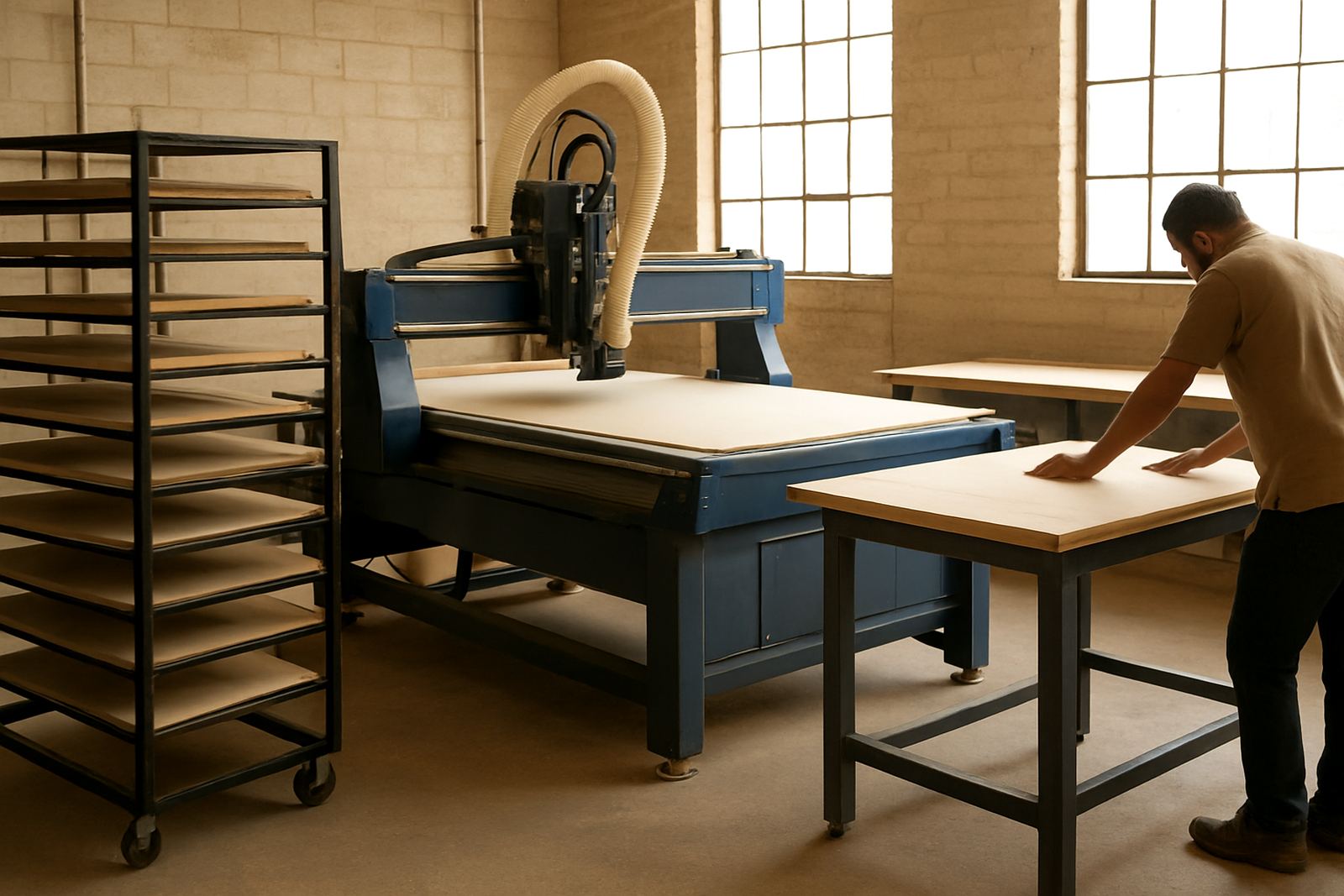
After production, sweep the table and vacuum the surface before lifting the next panel. If vacuum pods are used, check that the seals are free of dust and the pod faces are not scratched. On plain vacuum tables, inspect the gasket lines and make sure spoilboard holes are not blocked.
In coastal areas such as Durban North and Cape Town North, moisture can also affect hold down performance. Panels that sit open for too long may cup slightly, so the table needs to be clean and the vacuum path needs to be as efficient as possible.
A Short Weekly Routine Prevents Longer Breakdowns
Daily cleaning keeps things moving, but a weekly routine catches the issues that ordinary shift cleaning misses. This is where you look more closely at the spindle nose, tool holders, vacuum pipework and machine base. It also helps to log what was cleaned and what looked unusual, so the team has a simple record.
A practical weekly routine can include:
- Inspecting spindle area seals and visible fasteners
- Checking tool holder storage for dust and corrosion
- Cleaning under guards and around the back of the machine
- Looking for signs of coolant, oil or water ingress
- Backing up the controller after any setting change
If a machine is being moved between Germiston, Midrand or Pretoria East sites, a full clean before relocation reduces the chance of chips shaking into sensitive areas during transport. It also gives the installation team a cleaner starting point for commissioning.
Train the Operator, Not Just the Cleaner
The best cleaning routine works when the operator owns it. A router does not need a long washdown, it needs the same few tasks done the same way every day. That is why training matters. If the team knows which surfaces must stay dry, which rails may be wiped, and which panels should never be sprayed with liquid, the machine usually lasts longer and cuts better.
At one Johannesburg East workshop, a simple end of shift routine reduced repeated homing faults on a nesting router. The issue was not a failing sensor, just dust gathering in the same corner each day because nobody had been assigned that area. Once the team split the tasks between loading, cutting and cleanup, the machine settled down and the faults stopped coming back.
For South African workshops working with load shedding, the same rule applies after every interruption. When power returns, clear chips, check the table and inspect the rails before restarting the job. A minute spent cleaning is often the difference between a normal restart and a scrap sheet.